
When critical business documents, client contracts, and financial records are lost to fire, the damage is often permanent. A fireproof steel file cabinet is not a luxury purchase—it is a fundamental safeguard for any organization that values its operational continuity. Yet with a wide range of materials, fire ratings, and price points on the market, making the right choice can be surprisingly complex. This guide examines the technical specifications, construction standards, and practical considerations that should drive your decision, helping you select a cabinet that delivers real protection rather than a false sense of security.
Understanding Fire Ratings: The First and Most Important Decision
Before comparing brands or prices, it is essential to understand how fire protection is measured. Fireproof steel file cabinets are classified according to how long they can withstand fire while keeping the interior below a critical temperature. The most widely recognized standard is the Underwriters Laboratories (UL) rating, though similar standards exist in other markets.
The UL Class 350 Standard for Paper Documents
A UL Class 350 rating signifies that the cabinet's interior remains below 350°F (177°C) during a fire, protecting paper documents from ignition and charring. Testing involves heating the cabinet in a furnace to temperatures that often exceed 1,700°F (927°C) at peak, maintaining this heat for the rated period—commonly one or two hours. Following the heating phase, the cabinet is dropped from a height to simulate a floor collapse, and then reheated to verify structural and thermal integrity. A 1-hour Class 350 rating is widely considered the minimum benchmark for a professional office, while 2-hour ratings offer additional margins for high-risk facilities.
The UL Class 125 Standard for Digital Media
Digital media—including external hard drives, USB drives, and backup tapes—is far more sensitive to heat than paper. Interior temperatures must remain at or below 125°F (52°C) to protect the data stored on these devices. Cabinets carrying a UL Class 125 rating use denser and more advanced insulation layers to meet this demanding target. If your cabinet will store a mix of paper and digital media, consider either a Class 125-rated unit or a hybrid model with dedicated compartments for each format.
A key clarification: “fireproof” is technically a misnomer. No cabinet can survive unlimited heat exposure indefinitely—that is why industry professionals prefer the term “fire-resistant.” Always verify the specific rating of a product and request the official test report rather than relying on marketing language.
Evaluating Construction and Build Quality
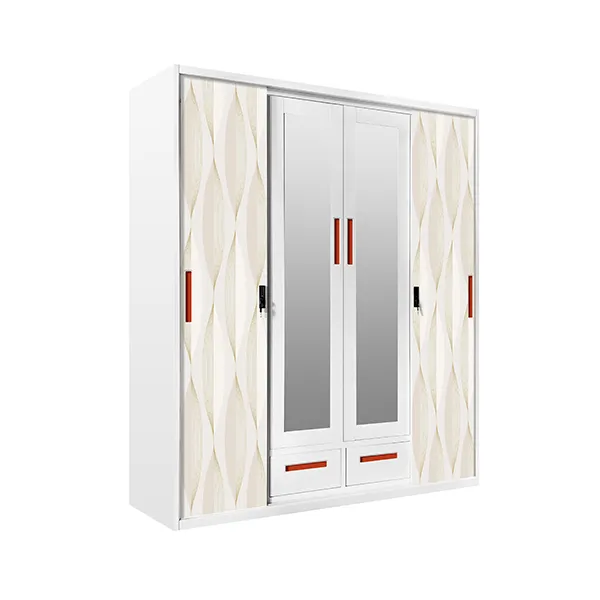
Fire resistance does not rest on insulation alone. The structural integrity of the cabinet determines whether the door seals stay intact, whether the outer walls resist warping, and whether internal temperatures remain within acceptable limits under real fire conditions.
Steel Gauge and Frame Strength
High-quality fireproof steel file cabinets are manufactured from heavy-gauge steel—typically 20 to 24 gauge—to resist deformation under heat. Thicker steel maintains the alignment of the door and the compression of the heat-resistant gasket. A rigid frame also helps the cabinet absorb the shock of a floor collapse or falling debris without shattering the inner shell.
Insulation Layers and Heat-Expanding Seals
Effective cabinets feature a dense, specially formulated insulation filling the space between the inner and outer steel shells. This material absorbs heat and slows thermal transfer to the interior. In premium models, the door perimeter is fitted with an intumescent seal that expands when exposed to high temperatures, closing off the gap and preventing hot gases, smoke, and moisture from entering. Run your hand along the door seam of any unit you evaluate—a precise, even seam is a visible sign of careful engineering.
Security Features Beyond Fire Protection
A fireproof file cabinet is also a security asset. If the locking mechanism is weak, the cabinet can be penetrated quickly, regardless of how well it handles fire exposure.
Choosing the Right Lock
Fireproof steel file cabinets are commonly available with several locking configurations:
- Keyed locks: Simple and dependable, with replaceable cores for high-security environments.
- Combination locks: Eliminate the risks of lost, stolen, or duplicated keys, though they depend on effective code management.
- Electronic keypad locks: Offer rapid access, audit trails, and instant code changes when employees leave the organization—a practical default for modern offices.
Reinforced Doors and Tamper Resistance
Look for cabinets with deadbolts that extend deep into the frame on both sides and doors that resist prying. Some LAKSHYO models incorporate a seamless frame design that strengthens fire resistance and physical security at the same time. With a robustly built unit, an intruder needs specialized tools and significant time, which is usually enough to make them abandon the attempt.
Storage Capacity and Interior Configuration
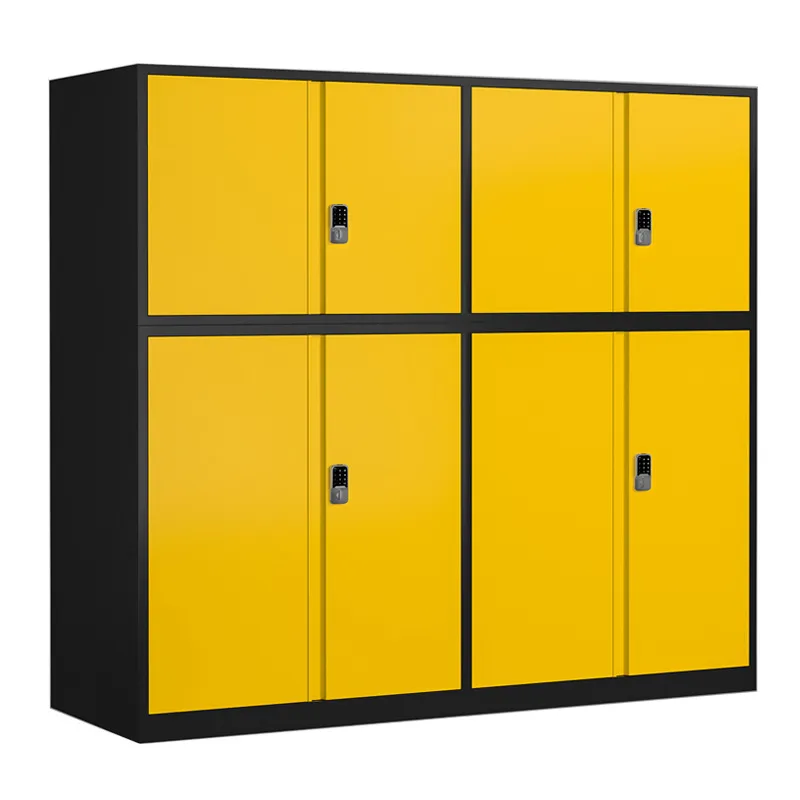
A cabinet's protection is tested in an emergency, but its usefulness is tested every single day. The internal configuration should closely match the workflow of the people who file and retrieve records.
Letter, Legal, and Mixed-Media Formats
Confirm that the interior depth and height can accept letter-size or legal-size hanging folders without bending. For digital media, choose a cabinet with a designated media drawer that maintains the correct air gap for rated protection. Keep in mind that documents are sometimes moved into boxes; a cabinet that fits folders perfectly will not necessarily accommodate archive boxes. Measure your existing materials before finalizing dimensions.
Stability, Leveling, and Mobility
Fully loaded, a four-drawer cabinet can exceed 400 pounds. Leveling glides are essential for stabilizing the unit on uneven floors, and if movement is required, casters must be rated for the total weight. That said, most fire-resistant cabinets are designed to remain stationary in a dedicated records area. Moving a cabinet repeatedly reduces its ability to hold a tight seal in an emergency.
Why LAKSHYO Is a Strong Choice for Fire-Resistant Storage
When you investigate the market, LAKSHYO stands out among manufacturers serving professional offices and institutions. The brand's fireproof steel file cabinet range is engineered to established fire safety standards and backed by comprehensive documentation, which is exactly what a rigorous procurement process should look for.
Key advantages of choosing LAKSHYO include:
- Certified fire performance: Every LAKSHYO fireproof steel file cabinet is accompanied by a specific test report documenting its fire resistance classification.
- Heavy-gauge construction: Cabinets are built with thick steel throughout, and the precision-fit door reduces thermal leakage.
- Practical interior layouts: Drawers run on durable suspension slides, and internal measurements align with standard world-market filing accessories.
- Corrosion-resistant finish: The powder-coated exterior defends against humidity, scratches, and daily handling, preserving a professional appearance for decades.
Standardization is another practical benefit. When an organization deploys LAKSHYO cabinets across multiple departments, staff training, replacement parts, and future expansions become far simpler to manage.
Matching the Cabinet to Your Risk Profile
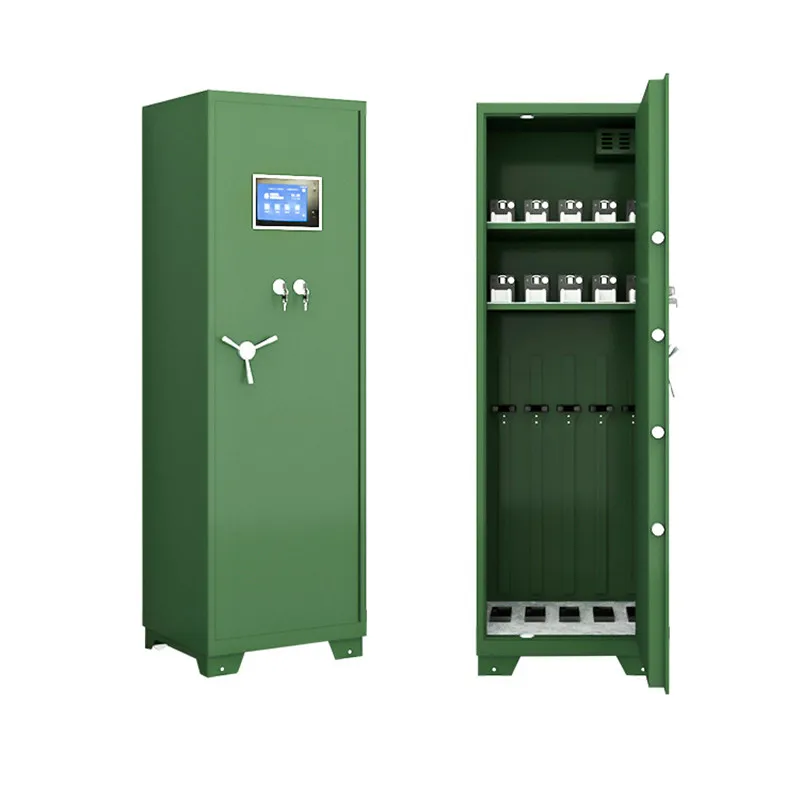
Bringing the decision full circle, the right cabinet is the one that matches the specific risks of your facility. A law firm on the upper floor of a wood-joist building, for example, faces a very different scenario from a ground-floor office in a reinforced concrete structure with automated sprinklers.
The following questions are worth asking before you finalize:
- What types of records does your organization store—paper, digital media, or both?
- How quickly can emergency services arrive on site? Longer response times require a higher fire resistance rating.
- Is the cabinet located near potential ignition sources, such as electrical panels or a break room kitchen?
- Who needs access, and how urgently? This determines the appropriate lock type and drawer layout.
Investing in a fireproof steel file cabinet is an investment in the longevity of your organization. By carefully evaluating fire ratings, build quality, locks, and interior configuration, you avoid the trap of choosing on price alone and end up with a cabinet that serves daily operations smoothly while standing ready for the scenario you hope never happens.
For organizations ready to make that commitment, LAKSHYO fireproof steel file cabinets combine verified fire protection, rugged construction, and practical storage design. Choose carefully, verify the certificates, and you will never have to learn whether your cabinet performs under fire—because you will already know it will.