
Fitting out an office on a fixed budget usually forces a choice between furniture that looks acceptable and furniture that survives daily use. Steel office furniture resolves much of that conflict, but only when the buyer understands what actually drives the price. Lockers, filing cabinets, workstations and storage cupboards made from cold-rolled steel can cost less over a five-year period than cheaper-looking alternatives that need replacing every two or three years. This guide is practical rather than promotional: it explains how steel furniture pricing works, shows where savings are genuine and where they are an illusion, and describes how to assemble a complete steel office setup without exceeding the number on the spreadsheet.
Why Steel Is Usually the Cheaper Choice Over Time
The purchase price on an invoice is only one part of furniture cost. The number that matters to a facilities manager or business owner is the total spent from installation to disposal. Steel consistently wins that calculation, and the reasons are structural rather than cosmetic.
Durability shortens the replacement cycle
A powder-coated steel cabinet with a welded frame does not delaminate, swell after a spilled drink, or sag when a drawer is overloaded. Particle board desks typically need replacing within three to five years in a busy office; steel units commonly remain in service for a decade or more. Spread that difference across twenty workstations and the arithmetic becomes obvious.
Maintenance and housekeeping costs stay low
Steel surfaces wipe clean, resist scratches from chair arms and trolleys, and do not absorb odours. Offices that store files in steel cabinets avoid the recurring cost of pest treatment, humidity damage repair and edge-repair kits. These are small line items individually, but they accumulate quietly across a large floor plan.
Resale and relocation value
When a company moves or downsizes, steel furniture can be dismantled, transported and reassembled without losing structural integrity. Wooden and composite units rarely survive more than one move. That portability converts a sunk cost into a recoverable asset.
What Actually Drives the Price of Steel Office Furniture
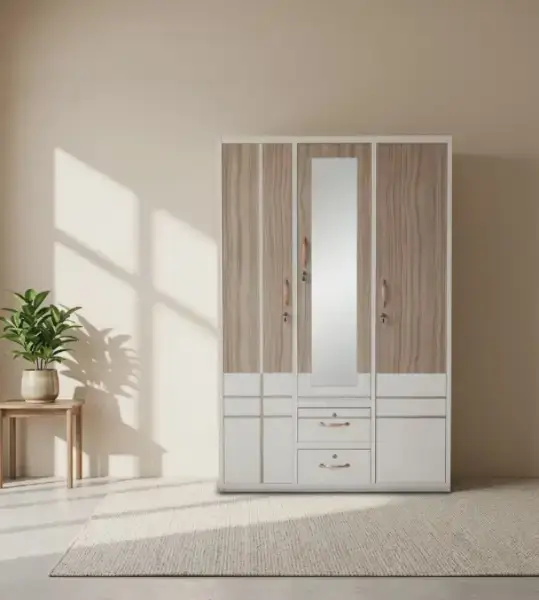
Two steel cabinets can look identical in a photograph and differ by 40 percent in price. The gap comes from a small number of manufacturing decisions:
- Steel gauge: Thicker sheet metal resists denting and holds drawer alignment longer. Very thin gauges are the most common way suppliers lower a quoted price.
- Coating method: Powder coating applied and cured properly outlasts cheap spray finishes that chip at corners and edges.
- Locking and hardware: Cam locks, central locking bars and branded drawer slides add cost but determine how long the unit stays functional.
- Assembly status: Flat-packed units cost less to ship and store; pre-assembled units cost less in labour to install. The cheaper option depends on your own staffing.
- Order volume: Steel furniture is priced on batch production. Ordering twenty units of the same model almost always costs less per unit than ordering five.
- Standard versus custom dimensions: Standard widths and depths come off existing tooling. Custom fabrication adds engineering time to every single unit.
Understanding these six variables is what allows a buyer to negotiate intelligently instead of simply accepting or rejecting the first quotation.
Steel Versus Wood and Particle Board on Cost
Budget office furniture is usually compared across three materials. Each has a legitimate place, and the honest comparison looks like this:
- Steel: Higher upfront cost per unit than particle board, lowest cost per year of service, best performance for storage, filing and high-traffic areas.
- Engineered wood: Lowest entry price, attractive finishes, but vulnerable to moisture, edge damage and repeated relocation. Best reserved for executive-facing surfaces that receive light use.
- Solid wood: Highest upfront cost and highest maintenance requirement. Rarely a rational choice when the brief is affordability.
A practical strategy is to mix materials by function rather than by appearance: steel for filing, storage, lockers and workstation frames, with wood-finish tops on desks where client-facing presentation matters. This hybrid approach typically delivers the look of a premium office at a fraction of the all-wood cost.
How to Build a Complete Steel Furniture Package Under Budget
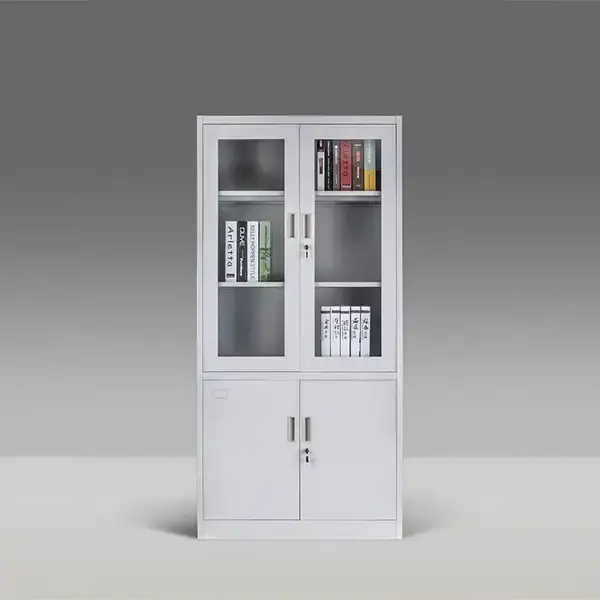
Start with the items used every day
Allocate the largest share of the budget to whatever staff touch hourly: pedestals, filing cabinets, lockers and desk frames. Decorative items such as display shelving can wait for a second phase. This sequencing prevents the common mistake of spending the budget on reception furniture while the records room remains unorganised.
Choose standard dimensions wherever possible
Standard 900 mm and 1200 mm cabinet widths, standard drawer depths and standard locker banks are produced continuously, which keeps unit prices down and delivery times short. Custom sizes should be reserved for genuinely constrained spaces, such as a narrow records corridor or a server room wall.
Buy in phases and consolidate the order
Phased purchasing keeps cash flow manageable, but each phase should be large enough to qualify for volume pricing. Consolidating an order of thirty units into a single purchase order is usually more economical than three separate orders of ten. Plan the full requirement before placing the first order so the volumes add up correctly.
Working With a Supplier That Understands Tight Budgets
Price is only one variable in a successful furniture purchase. Delivery timing, packaging quality, spare-part availability and the willingness to substitute a comparable model when a specific item is out of stock all affect the final cost of ownership. A supplier that manufactures steel furniture in volume can advise which models are running on efficient production batches, which standard colours carry no surcharge, and where a smaller specification will not compromise the unit's lifespan.
LAKSHYO works with offices that have a defined budget ceiling, and the useful starting point is a room-by-room requirement list rather than a product catalogue. Once the quantities, dimensions and usage patterns are clear, the specification can be matched to models that deliver the required strength at the lowest realistic price.
Questions Buyers Ask Before Ordering
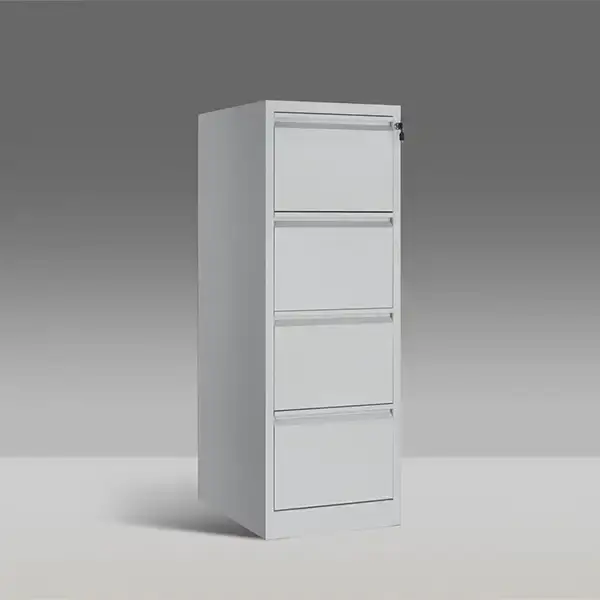
Is thinner steel always a bad choice?
Not always. A lightweight cabinet used for occasional document storage in a small office can perform perfectly well. Thin gauge becomes a problem in high-traffic areas, warehouses, schools and any setting where units are moved or loaded heavily.
How much can be saved by ordering in bulk?
Savings depend on the model, the finish and the total volume, but batch pricing is a real factor in steel furniture manufacturing. The most accurate approach is to request quotations for the full quantity rather than extrapolating from a single-unit price.
Should lockers and filing cabinets be bought together?
Combining them usually reduces freight cost and simplifies installation, since both items share similar dimensions and fixing methods. It also makes colour and finish consistency easier to manage.
Does powder coating add significant cost?
It adds a modest amount per unit compared with basic finishes. Given that coating failure is one of the main reasons steel furniture looks worn before it stops working, the extra cost is generally justified in visible areas.
Conclusion
Affordable steel office furniture is not about finding the lowest quotation. It is about paying once for units that will still be in service when cheaper alternatives have been replaced twice. Focus the budget on steel where durability matters, insist on standard dimensions, order in consolidated batches, and compare suppliers on total cost rather than headline price. Handled that way, a tight budget stops being a constraint on quality and becomes a discipline that produces a better-equipped office at a lower lifetime cost.