
A small office rarely fails because of ambition. It struggles because of square footage. Desks that swallow walkways, filing cabinets that block doors, and chairs that never tuck away all chip away at the same limited space. Compact steel furniture addresses that problem without forcing you to accept flimsy, temporary-looking pieces. Steel frames are thin where wood panels are thick, rigid where particle board sags, and precise where cheap laminates wobble. LAKSHYO has worked with businesses operating in tight footprints for years, and one pattern holds true: the right steel configuration can add usable workspace without adding a single square meter. This guide explains what compact steel furniture solves, how it compares with conventional alternatives, and how to plan a small office that finally works.
Why Small Offices Outgrow Their Furniture So Quickly
Most office furniture is designed for rooms that have room to spare. A standard executive desk is 1.5 to 1.8 meters wide and 75 to 90 centimeters deep. Add a return unit, a pedestal drawer, a guest chair, and a filing cabinet, and a single workstation can consume six to eight square meters. In a room measuring fifteen square meters, that leaves almost nothing for movement.
The problem compounds because traditional furniture is volumetric rather than structural. A wooden desk uses thickness to create strength, which means every surface is surrounded by 18 to 25 millimeters of material that does nothing except occupy space. Multiply that across a desk, two storage units, and a meeting table, and you have lost a meaningful percentage of your floor area to material rather than function.
Compact steel furniture inverts that logic. Strength comes from the geometry of the steel section, not from bulk, so components stay slim without becoming fragile. That single design principle is why a steel-framed workstation can fit into a footprint where a similarly capable wooden one cannot.
What Compact Steel Furniture Actually Solves
Thin Profiles Without Structural Compromise
Powder-coated steel legs and frames typically measure 25 to 50 millimeters across, compared with the bulk of a solid timber leg at 70 to 80 millimeters. On a single desk that difference is minor. Across four workstations arranged in a pod, it changes how much circulation space remains. Slim frames also make cables easier to route and cleaning easier to perform, because there are fewer deep crevices to reach into.
Vertical Storage in Vertical Space
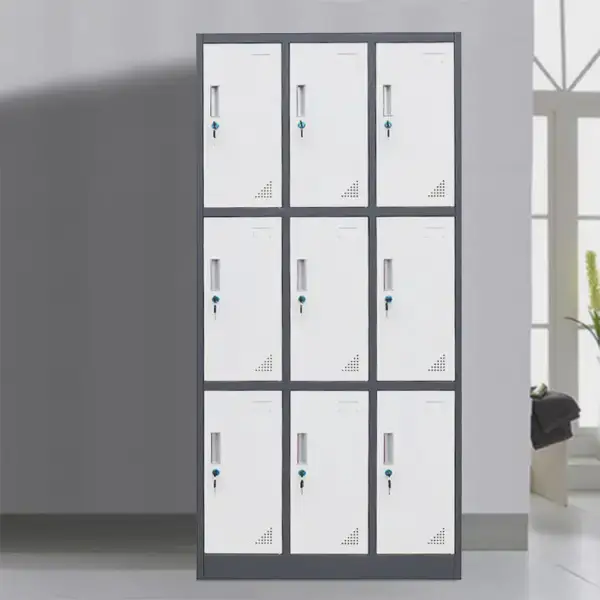
Small offices usually have unused height. Steel shelving and tambour-door cabinets can rise to 1.8 or 2.1 meters while occupying a floor footprint of roughly 0.4 square meters. Because steel shelving carries high load ratings per shelf, you can consolidate documents, supplies, and equipment that were previously spread across multiple low cabinets. The floor area you recover is often more valuable than the storage you add.
Modular Configurations That Change With the Team
Steel systems are typically built from standardized frames, tops, and connectors. That means a bench desk for three people can become two desks and a storage wall without buying an entirely new set of furniture. For a small business whose headcount shifts, that flexibility has a direct financial value. LAKSHYO designs its compact steel ranges around this principle so components remain compatible across configurations.
Steel Compared With Wood, Laminate, and Particle Board
Material choice drives almost every practical outcome in a small office. The differences below are consistent enough to plan around.
- Space efficiency: Steel frames are significantly slimmer than timber or panel alternatives at equivalent strength, which preserves circulation space.
- Durability: Powder-coated steel resists dents, moisture, and edge chipping. Laminate and particle board degrade quickly at edges and in humid conditions.
- Load capacity: A steel shelf or desk frame typically supports more weight per millimeter of thickness than wood-based equivalents.
- Maintenance: Steel wipes clean and does not require polishing, sanding, or refinishing.
- Fire and pest resistance: Steel does not feed insects or contribute fuel load the way timber products can.
- Reconfiguration: Bolted steel systems can be dismantled and rebuilt; glued or doweled wooden units generally cannot.
- Acoustics and warmth: This is where wood has an advantage. Steel can feel cold and reflective, which is why steel frames are usually paired with wood, laminate, or fabric tops and acoustic panels.
The practical conclusion is not that steel replaces everything. It is that steel belongs in the structural layer, where space and strength matter most, while warmer materials belong on the surfaces people touch.
Choosing the Right Pieces for Your Footprint
Measure the Room Before You Measure the Furniture
Record the total floor area, then subtract door swings, window access, and any fixed services. What remains is your usable zone. Aim to keep at least 80 centimeters of clear circulation behind occupied chairs, and 100 centimeters for a main walkway. If a piece cannot fit within those limits, it is the wrong piece regardless of how good it looks in a catalogue.
Prioritize Vertical Storage Over Floor Cabinets
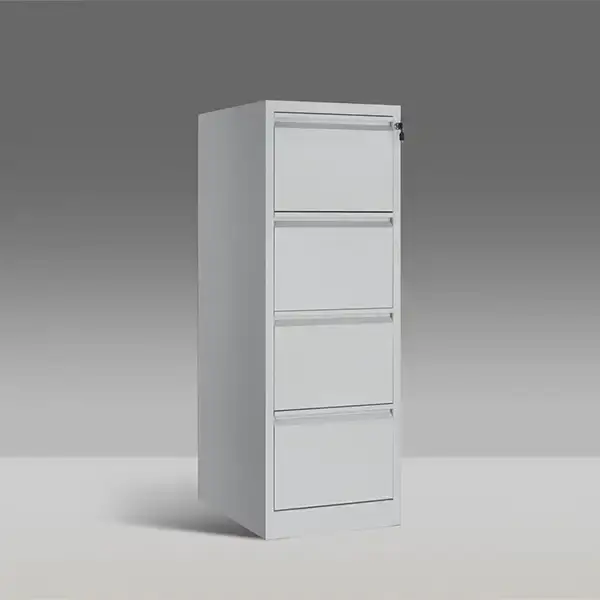
In a room under twenty square meters, floor-standing cabinets are expensive in spatial terms. Tall steel shelving, wall-mounted units, and overhead cupboards use height instead. Keep the heaviest items at waist level, frequently used items between waist and shoulder, and archive material above.
Check Load Ratings, Finishes, and Edge Treatment
Ask for the static load rating per shelf or per desk, not just the overall product weight. Confirm the coating specification, since a quality powder coat resists scratching far better than a thin paint finish. Check that cut edges are folded, capped, or coated, because exposed steel edges are the most common source of damage and injury in budget furniture.
Layout Principles That Make a Small Office Feel Larger
- Place desks along walls rather than in the centre, unless a bench pod genuinely serves collaboration.
- Group storage into one vertical column instead of scattering cabinets around the room.
- Choose benches and tables with central or rear legs so no one loses knee space to a corner post.
- Keep the floor visible. Furniture raised on slim steel legs reads as lighter than solid plinths.
- Match finishes across pieces. Visual consistency reduces the sense of clutter that makes small rooms feel crowded.
Frequently Asked Questions

Is steel furniture too heavy for an office upper floor?
Steel is dense, but compact steel furniture uses thin sections and hollow profiles, so a typical desk weighs less than a solid timber desk of the same size. For unusually heavy shelving loaded with archives, confirm the floor loading with a structural engineer.
Does steel furniture look industrial rather than professional?
Only if you choose it that way. Powder coating is available in matte neutrals, and pairing steel frames with wood or laminate tops produces a finish suitable for client-facing offices.
How long does assembly take?
Bolted steel systems are usually assembled with basic hand tools, and most single workstations can be built in under an hour. Flat-packed delivery also means narrow stairwells and small lifts are rarely a problem.
Final Thoughts
A small office does not need less furniture. It needs furniture that earns its footprint. Compact steel solutions achieve that by concentrating strength into slim frames, pushing storage upward instead of outward, and remaining reconfigurable as your team changes. Start by measuring usable space, choose vertical storage before floor cabinets, and specify load ratings and finishes rather than assuming all steel is equal. Get those decisions right and the room will feel larger, work harder, and stay serviceable for years rather than seasons. That is the standard LAKSHYO builds its compact steel ranges to meet.