
Custom steel office furniture is rarely just a question of dimensions. When procurement teams or facility managers start requesting quotations, what they are really trying to establish is whether a supplier can hold a structural standard, a finish standard and a delivery commitment consistently over years of daily use. Steel furniture can feel anything but industrial — warm, quiet and precisely fitted to a space — but only when every specification is agreed in advance and verified at the factory. The points below outline the decisions that must be settled before an order is placed, and how each one affects price, durability and lead time.
What Custom Steel Office Furniture Actually Covers
The word custom means different things to different factories. Some treat it as a size adjustment on a standard cabinet; others treat it as a ground-up design exercise. Aligning on scope is the first step, because it determines tooling cost and lead time.
- Dimensional fit — depth, height and corner treatments adapted to a specific floor plan, including tight service elevators, sloped ceilings or non-standard room heights.
- Configuration — number of doors and drawers, opening direction, shelf positions, lock type, fixed or mobile base.
- Material — cold-rolled steel, galvanized steel or stainless steel, with a defined panel thickness and internal reinforcement.
- Color and finish — powder coating matched to a RAL reference, texture level, gloss or matte, and anti-fingerprint treatment.
- Hardware and accessories — cable cutouts, grommets, locks, label holders, leveling feet and mounting interfaces.
Writing the scope down forces decisions early. It also makes later quotations comparable, which is where most budget overruns begin.
Steel and Structure: The Decisions That Determine Service Life
Sheet Thickness and Grade
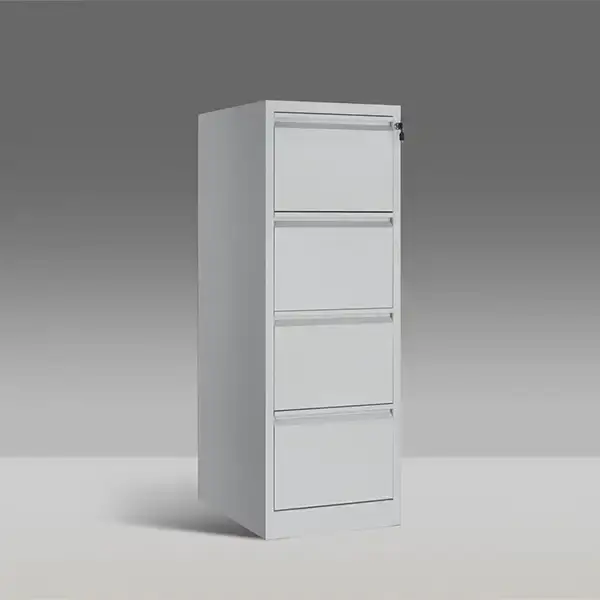
Thickness is the single most consequential specification in a steel furniture quotation, and the easiest one to quietly reduce. Cabinet bodies and doors commonly sit between 0.6 mm and 1.0 mm, while load-bearing shelves, work surfaces and moving parts need more. A thinner panel does not fail immediately; it flexes, then sags, then refuses to align at the door gap. Grade matters less than consistency: a well-bent, properly reinforced assembly in a mid-range steel will usually outperform a thin assembly in a premium grade. Ask suppliers to state thickness by component, not as a general claim.
Welding, Bending and Load Testing
How a cabinet is joined reveals more about build quality than any marketing claim. Spot welding is acceptable in concealed, non-structural positions; continuous welding or reinforced bends belong wherever load is transferred. For shelving and tambour or sliding systems, request static load figures and cycle-test results. A supplier who measures their own products will answer this immediately. One who does not will describe them as heavy duty instead.
Surface Treatment and Corrosion Resistance
Powder coating performance depends on preparation rather than on the powder itself. Degreasing, phosphating and thorough rinsing before coating determine whether the finish survives cleaning chemicals, humidity and daily contact. Coating thickness is typically measured in the 60–80 micron range for office furniture, and salt-spray test results should be available on request. If the furniture will sit near windows, kitchens or humid climate zones, specify the applicable test duration and confirm that edges and cutouts receive the same treatment as flat panels. Uncoated edges are the most common starting point for rust.
Ergonomics, Function and Detail Design
Matching Dimensions to Real Use
Steel furniture is unforgiving of optimistic planning. A locker bank that is 5 cm too deep can block a circulation route; a desk that is 2 cm too high becomes a daily complaint. Measure the finished floor, not the architectural drawing, and account for skirting boards, door swing arcs and cable trays. Where height adjustment is required, confirm the adjustment range and the mechanism's service rating rather than assuming it will suit every user.
Cable Management, Locks and Internal Accessories
These small items decide whether staff actually like the furniture. Decide early on grommet positions, vertical cable spines, ventilation slots for equipment cabinets, and whether locks should be keyed alike, keyed differently or master-keyed. For storage units, specify shelf adjustability in defined increments and confirm that dividers are removable without tools. Retrofitting these features after production is expensive and often visible.
Custom Versus Standard Steel Furniture: The Trade-Offs
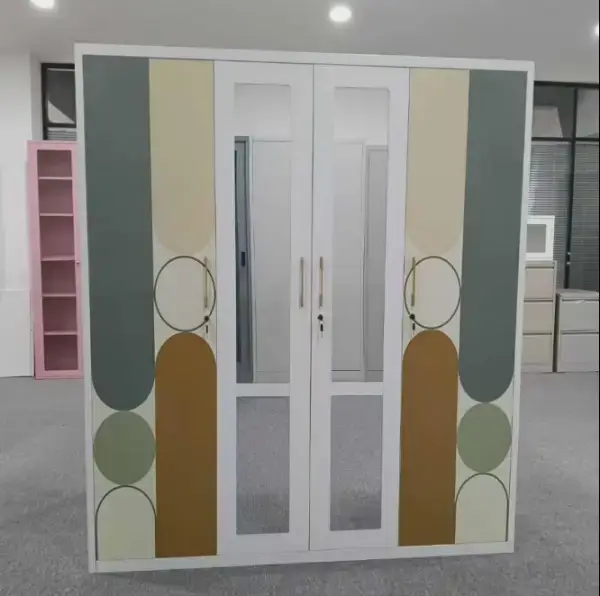
Custom production is not automatically the right answer for every project. The decision should follow the constraints of the space and the volume required.
Custom steel furniture
- Fits irregular or constrained floor plans without wasted space.
- Allows finish matching to an existing interior scheme.
- Permits function-specific design, such as equipment housings or integrated power access.
- Requires tooling or setup investment, quoted per project.
- Longer lead time, typically driven by sampling and approval stages.
- Spare parts and future reorders depend on the original supplier's records.
Standard steel furniture
- Lower unit cost and faster availability from stock.
- Proven designs with published load ratings.
- Limited color and size options, which can leave gaps in a layout.
- Compromises are absorbed by the space rather than the product.
For a single meeting room, a standard unit is usually the rational choice. For a full floor with fixed structural columns, mixed storage needs and a defined brand palette, custom production typically pays back through better space utilization and fewer replacement cycles.
Cost, Lead Time and Minimum Order Quantity
Custom pricing is driven by setup and material efficiency, not by size alone. The variables below explain most quotation differences between suppliers.
- Tooling and setup — new dies, bending programs or welding jigs required for a first-time design.
- Order quantity — larger batches amortize setup cost and improve material yield.
- Finish complexity — two-tone coating, special textures or precise RAL matching add process steps.
- Hardware selection — branded locks and slides carry a higher unit cost but reduce after-sales issues.
- Packaging and logistics — export-grade packing, palletizing and container loading plans affect landed cost as much as the product itself.
Discuss minimum order quantities honestly at the start. A factory that accepts a very small custom run may be absorbing the setup cost somewhere else, often in reduced thickness or simplified coating.
How to Evaluate a Custom Steel Furniture Supplier
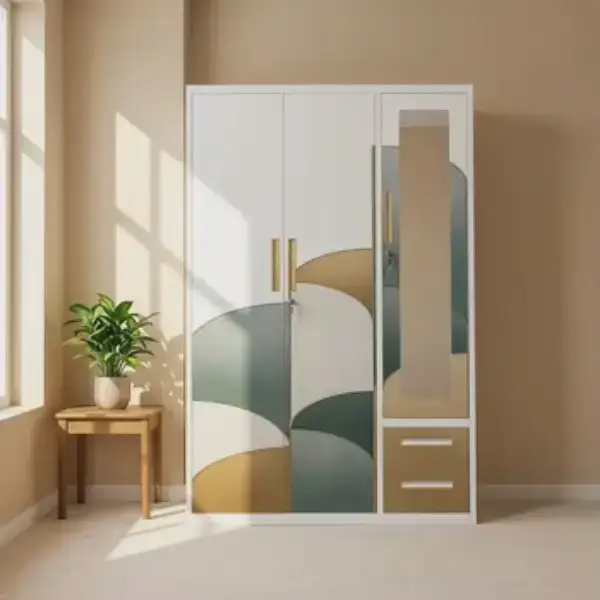
Selection should be based on process control rather than on catalogue photography. A pre-order checklist shortens the evaluation considerably:
- Confirm which production stages are handled in-house and which are subcontracted.
- Request a physical sample in the specified finish, not a color card.
- Ask for the inspection points used before packing, and whether load testing is documented.
- Verify warranty terms, spare-part availability and the response path for replacements.
- Check that drawings, tolerances and approval sign-offs are issued in writing before production begins.
Suppliers who work regularly on project-based office fit-outs tend to have these documents ready, because their clients demand them. LAKSHYO, for example, approaches custom steel office furniture as a specification-driven process, where material thickness, coating parameters and load ratings are agreed before tooling is committed. That discipline matters more than brand claims when a reorder is needed two years later.
Frequently Asked Questions
What minimum order quantity applies to custom steel office furniture?
It varies by design complexity. Simple size modifications on an existing model may be possible in small batches, while a completely new cabinet design usually requires a higher volume to justify tooling. Confirm the threshold before requesting drawings.
How long does a custom order take?
Most of the timeline is consumed by sampling, finish approval and drawing sign-off rather than by manufacturing. Projects that settle specifications early typically move into production much faster than those that continue revising after the sample stage.
Is custom steel furniture more durable than standard models?
Not automatically. Durability comes from panel thickness, reinforcement design and coating preparation. Custom production allows you to specify those values, but only if the supplier is willing to state and verify them.
Can the finish match an existing office color scheme?
Yes, provided the reference is clear. RAL or equivalent color codes, gloss level and texture should be confirmed on a physical sample, since screen colors and printed swatches vary considerably from the coated result.
Final Considerations
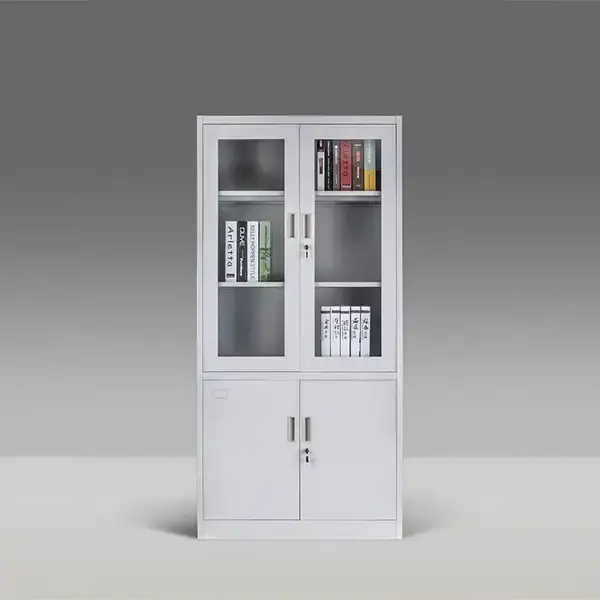
Buying custom steel office furniture is a specification exercise before it is a purchasing decision. Define the scope, set thickness and finish requirements by component, agree on inspection criteria, and choose a supplier who documents all three. Projects that follow this order rarely encounter surprises at installation; projects that skip it usually discover the gaps when the cabinets are already on site.