
Office clutter rarely announces itself. It accumulates quietly — a stack of folders on a desk, a box of cables under a table, three years of archived invoices nobody wants to discard. By the time the workspace feels cramped, the problem has outgrown a single shelf. Steel storage cabinets are the most dependable answer to that slow accumulation, because they combine load capacity, security, and a footprint that respects tight floor plans. This guide explains what separates a genuinely durable cabinet from a flimsy one, which configurations suit different clutter profiles, and how to choose a unit that still serves your office years from now.
Why Steel Outperforms Wood, Laminate, and Plastic in an Office Setting
The case for steel is not aesthetic preference; it is structural reality. Wood and laminate cabinets look warm in a showroom, but their particleboard cores swell when humidity rises, sag under sustained load, and lose their edges after a few knocks from a delivery trolley. Steel does not absorb moisture, does not harbour pests, and holds its shape when shelves are loaded to capacity and left that way for a decade.
Steel also wins on maintenance and fire behaviour. A powder-coated surface wipes clean with a damp cloth, whereas laminate seams trap dust and coffee rings. Steel will not contribute fuel to a spreading fire the way timber does, although it is worth being precise here: a steel cabinet is not a fireproof safe, and no office storage unit should be marketed as one.
Finally, steel is recyclable at end of life, which matters to facilities teams measuring their environmental footprint. A well-built steel cabinet is one of the few office purchases that can be refurbished, repainted, and redeployed rather than replaced.
The Features That Separate a Durable Cabinet from a Disposable One
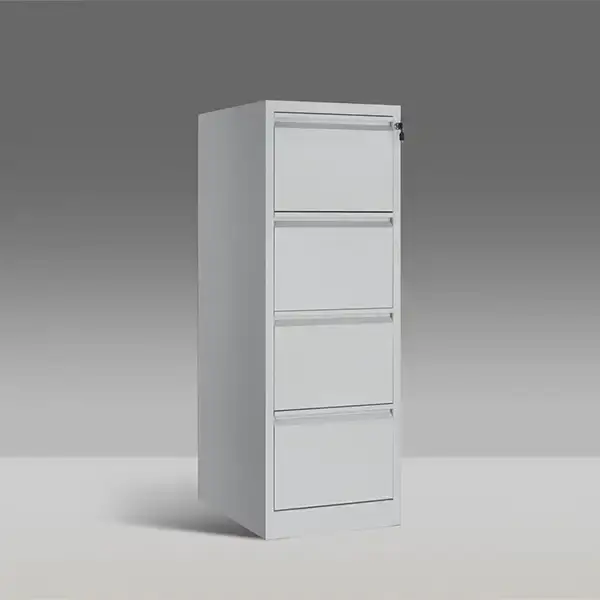
Two cabinets can look identical in a catalogue photograph and behave completely differently after eighteen months of daily use. These four attributes determine which one you are actually buying.
Steel Gauge and Weld Quality
Gauge refers to sheet thickness, and thinner sheets flex. A door that bows inward when pushed allows dust and, more importantly, lets a determined hand reach the locking bar. Examine the welds at the corners and along the shelf supports. Continuous spot welds and reinforced corner gussets hold rigidity; tack welds that look decorative will fail under load. Ask suppliers such as LAKSHYO for the gauge specification per model rather than relying on overall weight claims.
Powder Coating and Surface Finish
Powder coating is applied electrostatically and cured under heat, producing a finish that resists chipping far better than wet paint. Look for a uniform, slightly textured surface with no runs, bare patches, or overspray on the interior. Edges should be folded or hemmed, not left as exposed sheet metal that cuts fingers during a late-night file retrieval.
Locking Mechanism and Access Control
A three-point locking system engages the top, bottom, and side of the door, which prevents the twisting that defeats single-point cam locks. If more than one department shares the cabinet, consider a master-key system or an interchangeable core so keys can be reissued without replacing the lock body. For records with retention obligations, a lockable inner drawer adds a second layer of control.
Shelf Adjustability and Load Rating
Fixed shelves are cheaper and less useful. Adjustable shelves on stout support brackets let you reconfigure the interior when the filing system changes. Demand a per-shelf load rating in kilograms, not a vague statement about the cabinet's total capacity — that single number tells you more about real durability than any marketing description.
Matching the Cabinet Type to the Clutter You Actually Have
Clutter is not one problem, so it does not have one solution. Identify what is piling up before reading a single specification sheet.
- Paper records and active files: A lateral filing cabinet accepts hanging folders front-to-back or side-to-side and consumes less wall depth per file than a vertical unit, though vertical models remain useful in narrow alcoves.
- Mixed office supplies: A closed-door storage cabinet with two or three adjustable shelves hides boxes, toner, and stationery from view and keeps the room visually calm.
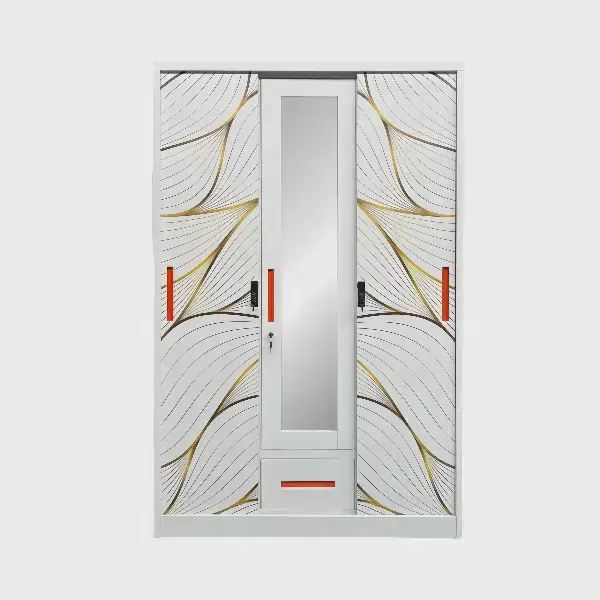
- Personal belongings and shift changeovers: Compartment cabinets and lockers prevent bags and helmets from colonising shared desks.
- Mobile clutter at the point of work: A pedestal on castors slides under a desk and keeps daily documents within arm's reach, so they never migrate onto the keyboard.
- Equipment and spare parts: Open steel shelving units with reinforced beams handle heavier, irregular items that doors would simply obstruct.
Sizing and Placement: The Step Most Buyers Skip
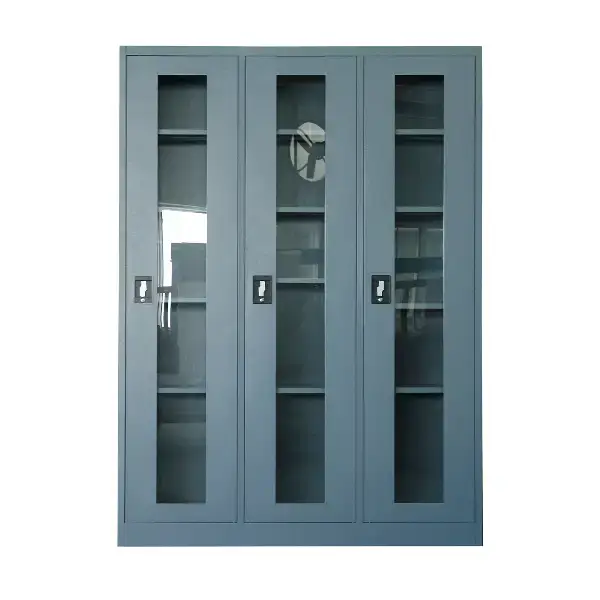
Measure the space before the cabinet arrives, not after. Confirm the door swing radius and the opening arc of drawers — a lateral file with a fully extended drawer needs considerably more aisle room than its closed footprint suggests. Leave enough clearance for a person to stand and pull a drawer without stepping backwards into a walkway. Allow for skirting boards, dado rails, and cable trunking running along the wall behind the unit.
Height deserves equal attention. A tall unit maximises vertical storage but must be anchored to the wall to prevent tipping when upper drawers are loaded and open. If the room has low windows or ceiling-mounted services, a mid-height cabinet with a separate top box delivers nearly the same capacity in a safer configuration.
A Practical Buying Checklist
- Measure the wall, door swing, and aisle clearance, then write the maximum dimensions down.
- List the contents by type, volume, and weight before choosing a configuration.
- Confirm steel gauge, weld type, and per-shelf load rating in writing.
- Verify the locking system, key duplication policy, and spare-part availability.
- Check whether shelves are adjustable and whether additional shelves can be ordered later.
- Ask about delivery, on-site assembly, and the warranty on locks and moving parts.
Questions Buyers Ask Before Ordering
How many cabinets does a typical office need?
Base the count on the volume of active records plus a realistic archive allowance, not on headcount alone. Under-ordering forces overflow onto desks within months, which is exactly the clutter the cabinet was bought to eliminate.
Is a heavier cabinet always better?
No. Heavier usually indicates thicker steel, but added shelving, doors, and locks also add mass. Judge gauge, weld quality, and load ratings instead of total weight.
Can steel cabinets be colour-matched to the interior?
Most reputable manufacturers offer a standard powder-coat range, and some accommodate custom colours on volume orders. Confirm lead times before committing to a non-standard finish.
Clutter is a symptom of unassigned storage, not of untidy employees. Choose a steel cabinet with an honest load rating, an adjustable interior, and a locking system suited to how your team actually works, and the mess on the desks will have somewhere better to go. Compare specifications from suppliers such as LAKSHYO against the checklist above, and the right unit becomes a straightforward decision rather than a gamble.