
Steel filing cabinets rarely top anyone's list of exciting office purchases, yet they solve two problems that every growing business eventually faces: keeping sensitive records protected and keeping the workspace usable. A single well-chosen cabinet can replace a stack of cardboard boxes, clear a corridor, and put a lock between your contracts and anyone who should not be reading them. The difficulty is choosing the right model. Capacity, drawer configuration, locking mechanism, and finish all affect how much space you actually save and how long the cabinet stays reliable. This guide explains what separates a durable, space-efficient steel cabinet from a cheap one that wastes both money and floor area, and it covers the details worth checking before you order.
Why Steel Still Sets the Standard for Secure Document Storage
Paper records remain the backbone of many businesses. Contracts, personnel files, financial vouchers, and compliance documentation need somewhere that resists forced entry, moisture, and daily wear. Steel cabinets continue to win because steel does not warp, crack, or loosen under load. A welded steel body behaves as a single structure, while wood and particleboard panels gradually give way around the exact points where locks and drawer runners are mounted — which is precisely where a cheap cabinet fails first.
Beyond strength, steel offers predictable performance. A powder-coated finish resists scratching and will not absorb spills the way some wood veneers do. A steel cabinet is built to stay in service for years, and when it is finally retired, it can be recycled almost completely — a point that matters more as procurement teams are asked to account for the full lifecycle of what they buy. For organisations handling sensitive data, the real advantage of steel is that it delivers both barrier protection against intrusion and long-term protection against environmental damage.
Locking Options That Actually Matter
The lock is the part of a steel body that turns it into secure storage. Three designs dominate the market, and each suits a different level of security:
- Keyed cam lock — simple, reliable, and appropriate for a single drawer or a full cabinet. It is enough for a normal office when key control is disciplined.
- Central locking system — one key secures every drawer through a connecting bar. The benefit is convenience; the drawback is that a single lost key exposes the whole cabinet.
- Digital or electronic lock — supports multiple user codes, access records, and re-authorisation without changing a cylinder. Useful for high-value records or shared cabinets.
Prying and picking resistance improves considerably when the lock sits inside a steel frame and the cabinet is anchored to the floor or wall. Many wooden cabinets marketed as secure cannot survive a single impact, whereas a properly fixed steel body typically deforms at the lock before the shell gives way.
Space-Saving Designs: Getting More Storage Into Less Floor Area
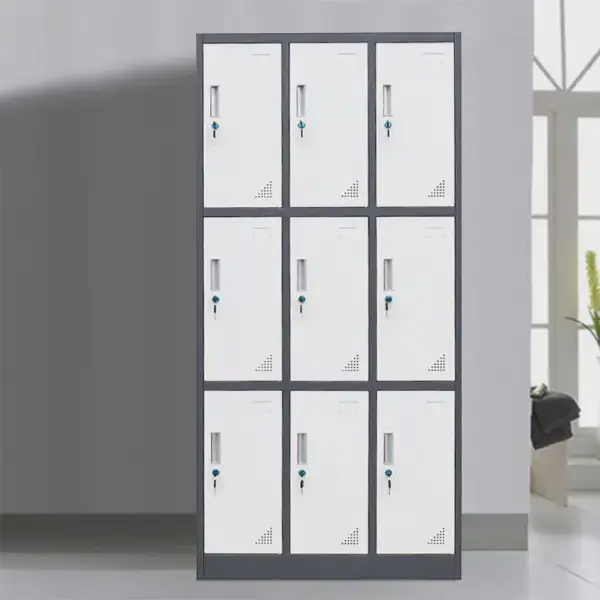
Space efficiency is not decided by cabinet height alone. It comes from the combination of footprint, how the drawers open, and the capacity each drawer provides. A tall cabinet placed badly wastes space because its drawers cannot extend fully; a modest cabinet in the right spot can free up passage width and hold more files. Steel bodies have a genuine advantage here: the higher strength-to-weight ratio of steel lets a manufacturer use thinner side panels and slimmer drawer runners while still carrying the same load, so more usable storage fits into the same footprint.
Vertical, Lateral, or Mobile: Choosing the Right Footprint
- Vertical cabinets — narrow and deep, ideal along a wall or tucked into a corner. Letter-size drawers generally hold more files per square metre of floor area than lateral units.
- Lateral cabinets — wide and shallow, with a top surface that works as a temporary workspace or a printer stand. Good where aisles are tight.
- Mobile pedestals — caster-mounted units roll under a desk or into a cupboard and release floor space when not in use. Confirm the caster rating against the fully loaded weight.
- Multi-drawer towers — five or six drawers exploit vertical height, which suits archives with high ceilings and limited floor area.
A practical tip: measure doorways, lifts, and corridors before deciding how a cabinet looks in the room. A steel body cannot be dismantled on site, so the delivery route often sets the real size limit.
Steel vs. Wood and Laminate Cabinets
Buyers frequently weigh steel against cheaper wooden or laminate alternatives. The upfront price may favour the composite option, but the lifetime calculation usually points the other way:
- Structural strength — a welded steel body stays square under heavy loads; particleboard splits at the runner screws.
- Fire behaviour — steel does not burn and can be lined for fire resistance; wood and laminate are themselves fuel.
- Moisture and pests — steel is unaffected by damp swelling, mould, or termites.
- Cleaning — a powder-coated surface needs a damp cloth, while wood veneer scratches and stains.
- Service life — steel cabinets routinely serve far longer than composite units that show structural problems within a few years.
- End-of-life value — steel is recyclable and holds scrap value; damaged board usually goes straight to waste.
Wooden units may still suit a reception area where appearance matters more than security and no sensitive files are stored. Where genuine secure storage and space efficiency are required, steel is the safer specification. LAKSHYO has found that businesses tired of replacing cheap cabinets every few years increasingly treat steel storage as the default.
What to Check Before You Buy
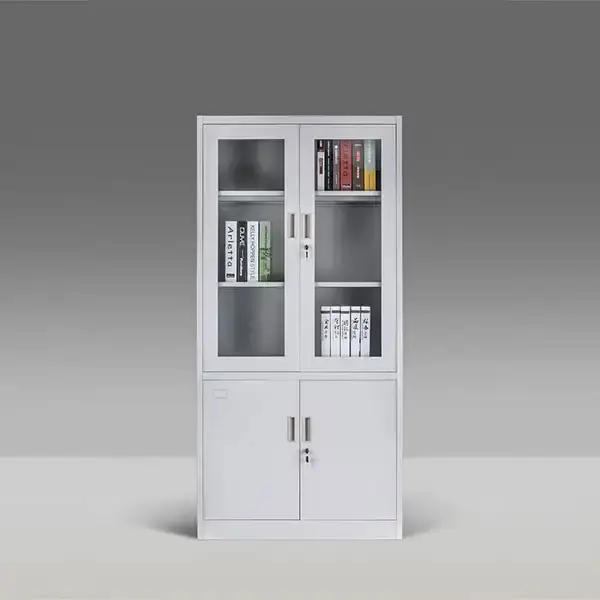
- File size — letter, legal, or A4. Legal-size drawers need greater depth, which changes the overall footprint.
- Load rating — check the per-drawer capacity when fully loaded, not just the empty cabinet weight.
- Runner quality — ball-bearing slides tolerate heavy daily use without sagging; cheap runners squeak and eventually jam.
- Lock choice — match the mechanism to your key control discipline. A key left in the drawer is no lock at all.
- Finish — powder coating outperforms wet paint for scratch and corrosion resistance.
- Stability fittings — anti-tip devices and floor anchors prevent a cabinet from toppling when several drawers are open.
Long-Term Durability and Maintenance
Steel bodies require very little attention. An occasional wipe-down, a light application of grease to the runners every couple of years, and a periodic check that the lock engages squarely will keep a cabinet in service for a decade. What to avoid is overloading drawers and forcing a jammed drawer shut, since both damage the runners and are expensive to replace. If the cabinet sits in a humid or uncontrolled space, a model with a corrosion-resistant pre-treatment and a raised base will extend its working life further.
Frequently Asked Questions
Are steel filing cabinets fireproof?
Standard steel cabinets are not fireproof. Steel does not burn, but heat still travels through the metal to the contents. Where fire protection is required, specify a certified fire-rated cabinet with insulated walls and an intumescent seal. The two look similar but serve different purposes and carry different prices.
How much weight can a steel filing cabinet hold?
Ratings vary widely with steel gauge and runner system. Treat the manufacturer's stated fully loaded drawer capacity as the figure to work from, and leave a margin. Files stored in binders or dense folders can weigh considerably more than loose paper. Ask the supplier for the load specification before ordering rather than discovering the limit afterwards.
Can a steel cabinet be locked securely without damaging the finish?
Yes. Modern steel cabinets are manufactured with the lock aperture and locking bar prepared at the factory. The key is to buy a locking model from the start rather than trying to add a padlock to an existing unit, which is both unsightly and easy to cut.
Where does a steel cabinet make the most sense?
It offers the best value wherever sensitive documents are stored, floor space is limited, or conditions are harsh — records rooms, finance offices, warehouse administration areas, clinics, and back-of-house service counters. Public areas where appearance and warmth come first can still use wood or laminate.
Choosing the right steel filing cabinet comes down to two things: genuine security for the documents inside it and genuine savings in the space around it. Match load capacity, lock type, and footprint to how you actually work rather than to whatever looks best in a showroom, and you end up with a unit that serves for years instead of one that is replaced every few.