
Office furniture rarely gets attention until it starts failing — a drawer that no longer slides smoothly, a desk that sags under the weight of two monitors, a cabinet door that hangs unevenly after a year of daily use. For businesses deciding where to spend their fit-out budget, the material behind the furniture matters as much as the design. Steel office furniture has moved well beyond utilitarian filing cabinets. Today it covers desks, storage walls, lockers, and modular workstations that hold up under constant use while keeping a clean, professional appearance. This article explains seven practical benefits of steel office furniture for businesses, along with the trade-offs worth weighing before you buy.
Why Material Choice Matters in Office Fit-Outs
Most companies replace furniture for one of three reasons: it broke, it looks worn, or the team outgrew it. All three usually trace back to the same decision — the furniture was selected on appearance and upfront price alone, without asking how it would perform after three or five years of daily use. Every material has a different failure pattern. Particleboard swells when a coffee cup tips over. Laminate edges chip and expose the core. Solid wood warps in humid climates and needs periodic refinishing.
Steel behaves differently. It does not absorb moisture, it does not provide food for pests, and it holds its shape under load. That difference in behaviour is what turns a furniture purchase into either a recurring expense or a long-term asset. The seven benefits below follow from that basic material property.
7 Benefits of Steel Office Furniture for Businesses
1. Durability Under Constant Daily Use
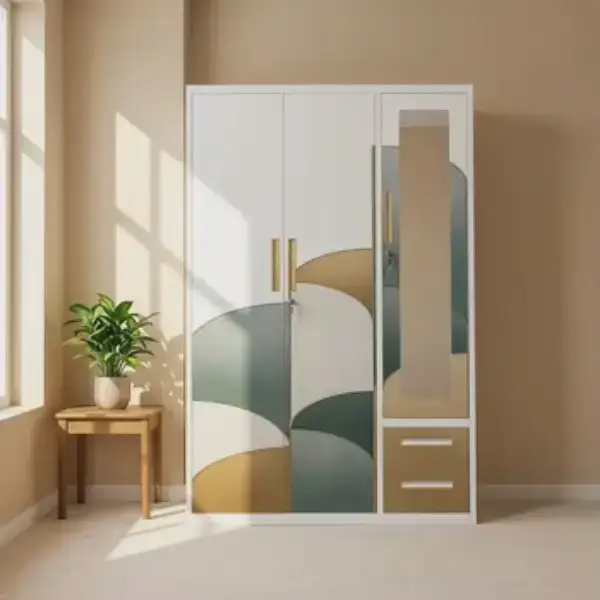
Steel frames and panels resist impact, twisting, and the slow deformation that affects softer materials over time. Well-made steel desks keep their alignment, so drawers continue to glide and doors continue to close flush years after installation. Powder-coated finishes are cured onto the metal surface rather than glued or laminated onto it, which makes them far more resistant to scratching and chipping. In high-traffic areas — reception counters, shared workstations, storage rooms, and mailrooms — this resilience translates directly into fewer service calls and fewer awkward conversations about damaged furniture.
2. Lower Cost of Ownership Over Time
Steel office furniture generally costs more per unit at the point of purchase than particleboard alternatives. The relevant comparison, however, is not the invoice — it is the total cost of ownership across the furniture's service life. A steel cabinet that lasts a decade or more costs less per year than two or three cheaper units replaced in the same period, before counting the labour, disruption, and disposal costs of each replacement cycle. Steel furniture also survives office moves, which means it can be redeployed to a new floor or a new branch instead of written off.
3. Minimal Maintenance and Easy Cleaning
Steel surfaces are wiped, not restored. There is no polishing schedule, no re-oiling, no edge repair, and no risk of a spilled drink seeping into a core material and swelling it out of shape. A damp cloth with a mild detergent handles almost everything. For facilities teams managing large floor plates, that reduction in cleaning time is meaningful, and it removes a common source of complaint from staff who share desks and storage.
4. Better Fire and Safety Performance
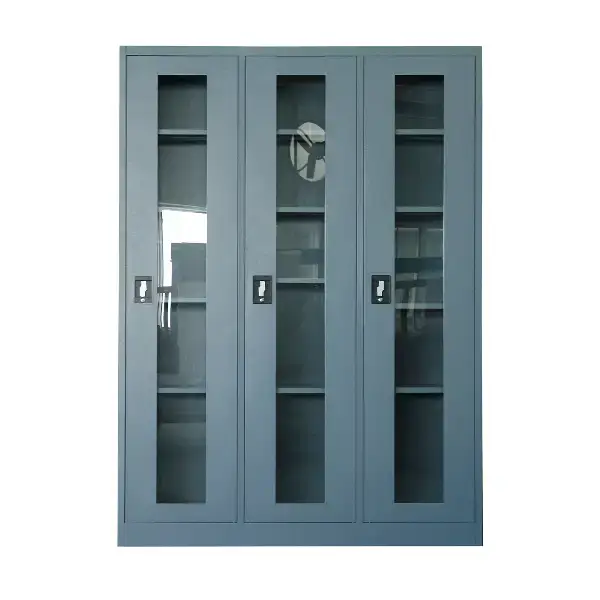
Steel is non-combustible. It does not add fuel load to a room, it does not release the smoke and fumes associated with burning wood composites or foams, and it will not smoulder unnoticed inside a closed cabinet. For businesses storing records, archives, or equipment in compact spaces, this matters for both insurance and compliance conversations. Steel also performs well as secure storage: lockers and cabinets can be anchored, fitted with locking mechanisms, and built with solid doors that resist forced entry far better than thin composite panels.
5. Design Flexibility and Space Efficiency
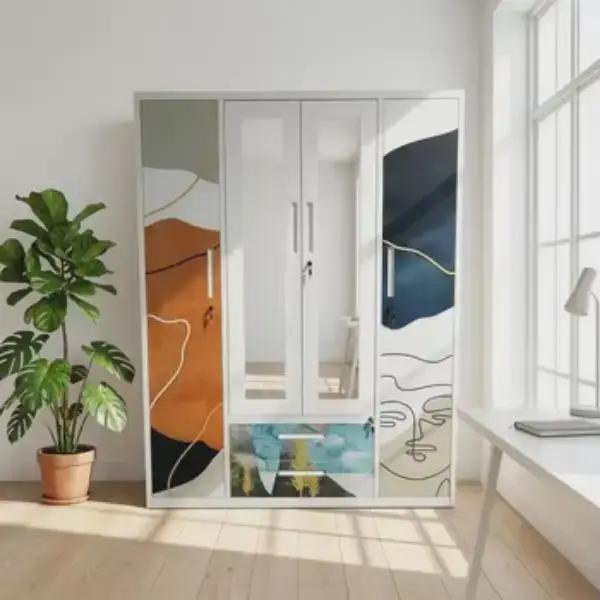
Modern steel furniture is engineered as a system, not a single object. Desks, pedestals, screens, lockers, and shelving can be specified in the same finish and dimension grid, then reconfigured when teams change shape. Steel allows for slim profiles and vertical storage that make better use of limited floor area, and internal cable management is straightforward because the structure itself can be designed to route and conceal wiring. Powder coating is available in a wide colour range, so steel does not have to look industrial — it can match a brand palette just as easily as wood veneer.
6. Improved Hygiene and Indoor Air Quality
Steel has a non-porous surface. It does not absorb spills, trap dust deep in a grain pattern, or provide a habitat for mould in humid conditions. That makes it easier to sanitise thoroughly in shared environments such as clinics, laboratories, break rooms, and hot-desking areas. Because quality steel furniture uses powder coatings rather than solvent-based lacquers, it also contributes fewer volatile organic compounds to indoor air, which supports a healthier working environment for staff and visitors.
7. Sustainability and End-of-Life Value
Steel is one of the most recycled materials in the world, and it can be recycled repeatedly without losing its properties. Furniture made with recycled steel content supports environmental targets, and at the end of its service life a steel cabinet or desk still carries scrap value rather than a disposal fee. Just as importantly, durable furniture reduces waste at the source: the most sustainable desk is the one that does not need to be replaced every few years to keep an office looking presentable.
Steel Compared With Common Office Furniture Materials
- Moisture resistance: Steel does not swell, warp, or delaminate when exposed to spills or humidity; particleboard and MDF do.
- Impact resistance: Steel resists dents and edge damage far better than laminate-wrapped panels, whose edges are the first point of failure.
- Service life: Steel structures typically remain functional across multiple office moves and refits; composite furniture often does not survive one.
- Maintenance: Steel needs wiping only; wood and laminate may need refinishing, edge repair, or replacement panels.
- Fire behaviour: Steel is non-combustible, while wood-based composites contribute fuel and smoke.
- Reconfigurability: Steel systems are modular and reusable; cut or glued composite units usually are not.
- Upfront cost: Steel sits higher at purchase, which is why the total cost of ownership, not the unit price, is the fair basis for comparison.
How to Choose Steel Office Furniture for Your Business
- Map the actual usage of each zone. Reception, storage rooms, and shared desks take far more abuse than a single-occupancy manager's office, and specifications should reflect that.
- Confirm the steel gauge and construction method. Thicker gauge and welded or reinforced joints determine how a unit behaves under load, not the finish alone.
- Check the coating. A properly cured powder coat resists chipping and fading and is easy to clean; a thin decorative coat is not.
- Verify adjustability and ergonomics for desks and workstations, since a durable desk that cannot be set to the right height will still cause problems.
- Plan for reconfiguration. Ask how panels, pedestals, and shelving can be added, removed, or repositioned as headcount changes.
- Evaluate the supplier, not just the product. Delivery timelines, installation quality, and after-sales support determine whether the furniture performs as intended. Working with a manufacturer such as LAKSHYO that supplies steel storage, workstations, and modular systems as a coordinated range makes it easier to keep finishes and dimensions consistent across an entire floor.
- Compare on total cost of ownership. Divide the purchase price by the expected service life and add maintenance, replacement, and disposal costs for each option.
Questions Businesses Ask About Steel Furniture
Is steel office furniture more expensive?
Per unit, yes — usually. Across the full service life, it is often cheaper, because the cost is spread over many more years and fewer replacements. The gap narrows further when steel units are moved between offices instead of being discarded.
Does steel furniture look cold or industrial?
Not anymore. Powder coating offers a broad colour range, and modern steel systems are designed with clean lines, rounded edges, integrated cable management, and contrasting surfaces that sit comfortably in corporate, healthcare, and education interiors.
How long does steel office furniture last?
Service life depends on gauge, construction quality, and usage intensity, but steel structures routinely remain functional well beyond the lifespan of composite alternatives and can be refurbished rather than replaced.
Is steel furniture noisy?
Bare sheet metal can amplify sound, which is why reputable manufacturers add bumpers, soft-close mechanisms, and internal acoustic linings. Specifying these details at the order stage avoids the problem entirely.
The Bottom Line
Steel office furniture is not the cheapest option on a quotation, and it is not meant to be. Its value lies in what it avoids: drawers that fail, cabinets that swell, storage that becomes a safety concern, and furniture that has to be bought twice. For businesses planning a fit-out they intend to keep for years, steel delivers predictable performance, easy maintenance, and a residual value that composite alternatives simply do not have. The practical approach is to specify steel where durability, hygiene, and security matter most — storage, shared workstations, lockers, and high-traffic areas — and to judge every option on total cost of ownership rather than sticker price.