
Steel office furniture has shed its utilitarian reputation. In 2025, buyers are specifying slim steel desks, modular storage walls, and steel-framed acoustic pods that look as considered as residential furniture while surviving a decade of daily use. The shift is driven by hybrid work: offices now need fewer seats, but those seats must flex, reconfigure, and hold up under shared use. This guide covers the design directions shaping modern steel office furniture, how steel compares with laminate and wood, and the specification details that determine whether a piece lasts five years or fifteen.
Why Steel Is Having a Design Moment
Three factors have converged. First, powder coating technology now delivers matte, textured, and fine-structure finishes that resist chipping far better than earlier gloss systems, so steel no longer reads as cold or clinical. Second, hybrid offices demand furniture that can be moved and rebuilt without a contractor, and bolted steel frames are ideal for that. Third, sustainability reporting has pushed specifiers toward materials with high recycled content and long service life — both areas where steel outperforms most alternatives.
Steel also solves a problem wood cannot: strength per millimeter of thickness. A 25 mm steel frame can carry the same load as a considerably bulkier timber section, which lets designers create thin, visually light workstations without sacrificing stability.
Design Ideas Defining the 2025 Steel Office
Slim-Profile Desks with Integrated Cable Management
The most requested configuration is a steel A-frame or loop-leg desk with a concealed cable tray running the full width. Perforated back panels double as ventilation and as mounting points for monitors. Look for desks where the tray is removable without dismantling the frame — this single detail reduces the cost of every future IT change.
Modular Steel Storage Walls
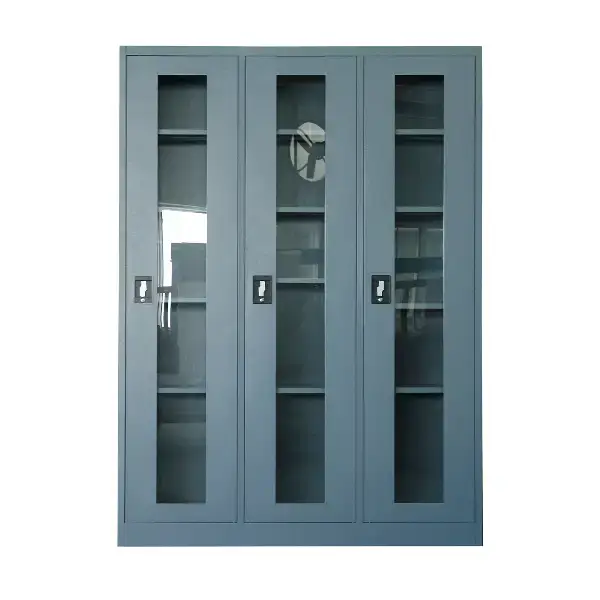
Floor-to-ceiling steel shelving has replaced freestanding cupboards in many fit-outs. Open bays hold reference material and plants; closed lockers handle personal storage for hot-desking. Because the uprights are predrilled at fixed intervals, a storage wall can start as a low credenza and grow upward later without replacing components.
Steel-Framed Acoustic Pods and Focus Booths
Steel gives pods the rigidity needed for airtight acoustic seals, which is why most certified booths use a welded or bolted steel skeleton. When evaluating pods, ask for the tested attenuation figure rather than a marketing claim, and confirm the door frame is steel rather than aluminum extrusion, which flexes under repeated use.
Powder-Coated Color Blocking
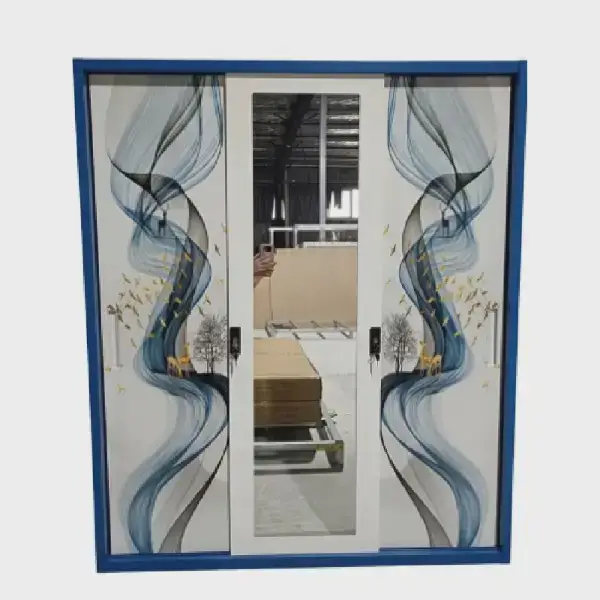
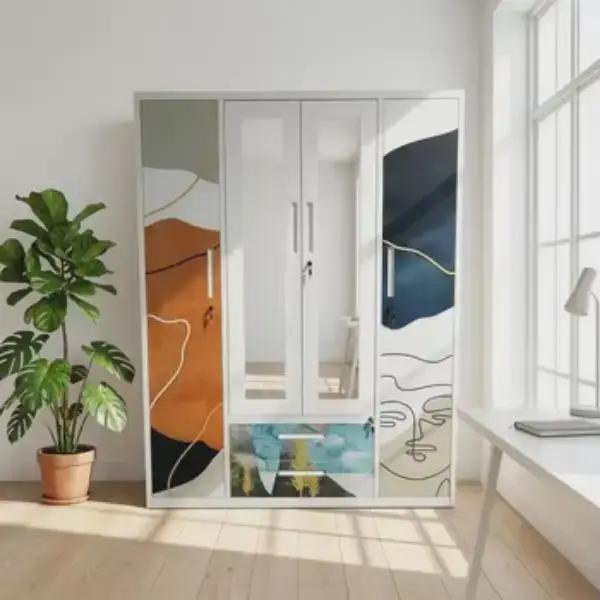
Two-tone schemes remain dominant: a neutral frame in graphite or warm grey paired with saturated drawer fronts in clay, sage, or deep blue. Color is applied at the powder stage, so it does not wear off at contact points the way a laminated edge can.
Steel Paired with Warm Materials
Steel reads best when it is not the only surface. Solid ash tops, wool felt screens, cork pinboards, and woven acoustic panels soften the frame and improve sound behavior. This pairing is the single fastest way to move a steel-heavy interior away from an industrial aesthetic.
Steel Compared with Other Furniture Materials
- Durability: Powder-coated steel resists impact, moisture, and abrasion; laminate chips at edges and veneer dents under point loads.
- Load capacity: Steel frames carry heavier shelving and monitor arms with less deflection over long spans.
- Reconfigurability: Bolted steel assemblies can be disassembled and rebuilt; glued panel systems usually cannot.
- Fire and moisture behavior: Steel does not swell, warp, or contribute fuel load the way timber and composite panels do.
- Recycled content: Steel is among the most recycled structural materials, and end-of-life scrap retains real value.
- Acoustics: Steel is reflective, so it needs felt, fabric, or perforated panel treatments to control reverberation — a planning requirement, not a defect.
- Upfront cost: Steel typically costs more than entry-level laminate but less than high-end veneer over a comparable service life.
How to Specify Steel Furniture for Hybrid Work
Start with the real occupancy number
Measure peak attendance across a full month rather than designing for headcount. Most hybrid offices need roughly 60 to 70 percent of previous desk capacity, which usually frees budget to upgrade the pieces that remain in daily use.
Interrogate the finish specification
Ask for the coating type, film thickness, and pre-treatment process. A properly phosphated and powder-coated surface will outperform a wet-painted one by a wide margin in high-contact areas such as drawer pulls and desk edges.
Plan for the next reconfiguration
Standardize frame depths and hole patterns across the range. If desks, lockers, and shelving share a common modular logic, a future layout change becomes a reinstallation task rather than a procurement project.
Check the warranty against the use case
A 24/7 operations room and a meeting suite place very different demands on hardware. Match the warranty terms and the drawer runner rating to the actual intensity of use.
Sustainability and Lifecycle
The strongest environmental argument for steel is longevity. Furniture that stays in service for fifteen years avoids the embodied carbon of two or three replacement cycles, even before recycling is considered. Buyers should ask suppliers for recycled content figures, coating chemistry, and a documented take-back route for end-of-life units. LAKSHYO works with specifiers on exactly these points, because the specification decisions made at quotation stage determine the environmental outcome years later.
Frequently Asked Questions
Is steel office furniture too cold for a client-facing space?
Not when it is paired with timber, felt, or textiles and specified in a matte finish. The perceived warmth of an interior comes mostly from color temperature and surface texture, not from the structural material itself.
Does steel furniture scratch easily?
Powder-coated steel resists scratching better than laminate and far better than soft veneer. Minor scuffs on matte finishes can usually be touched up locally without repainting the whole panel.
Can steel desks be fitted with monitor arms and under-desk power?
Yes, and this is one of steel's practical advantages. Steel tops and frames accept clamped and grommet-mounted arms, and integrated trays keep power and data cabling organized and serviceable.
How much maintenance does steel require?
Very little. A damp cloth with mild detergent is sufficient. Avoid abrasive pads and solvent cleaners, which dull matte coatings and can remove the protective film over time.
Choosing the Right Partner
Modern steel office furniture rewards buyers who specify carefully rather than shop by photograph. Confirm the frame gauge, the coating system, the modular logic, and the warranty terms before comparing prices, because those four variables explain most of the cost difference between quotations. Get them right, and a 2025 steel fit-out will still look intentional — and still be reconfigurable — well into the next decade.