
Industrial interiors are unsparing environments. Exposed brick, sealed concrete, visible ductwork and blackened steel glazing create a raw, structural aesthetic, but they also bring temperature swings, dust, and heavy foot traffic into the workspace. Furniture specified for these rooms has to look as though it belongs there and survive the conditions. Steel office furniture answers both requirements: it echoes the structural language of the building while offering load capacity, clean lines and a service life that wood veneer and laminate rarely match. This guide explains how steel furniture fits industrial interiors, which specifications actually matter, and how to plan a layout that stays coherent from reception through to the workshop floor.
Why Steel Suits Industrial Interiors Structurally and Visually
The industrial style is built on material honesty. Nothing is disguised: brick is left unplastered, services run exposed, and structure is celebrated rather than concealed. Steel furniture follows the same logic. A powder-coated steel desk frame, open steel shelving or a riveted metal cabinet reads as a continuation of the building rather than an object dropped into it.
Beyond appearance, steel performs where other materials degrade:
- Dimensional stability: steel does not warp, swell or delaminate when humidity fluctuates in converted warehouses and loft spaces.
- Load capacity: welded and bolted steel frames carry far more weight per millimetre of profile than timber, which matters for archive storage and equipment-heavy workstations.
- Impact resistance: in mixed office and light-production environments, steel absorbs knocks from trolleys, tooling and crates without chipping to the core.
- Cleanability: non-porous coated surfaces wipe down easily, an advantage in dusty or industrial-adjacent settings.
The visual payoff is equally practical. Steel frames are slimmer than timber equivalents, so a room with a low ceiling or a dense grid of columns gains an impression of space rather than losing it.
Matching Steel Furniture to the Industrial Aesthetic
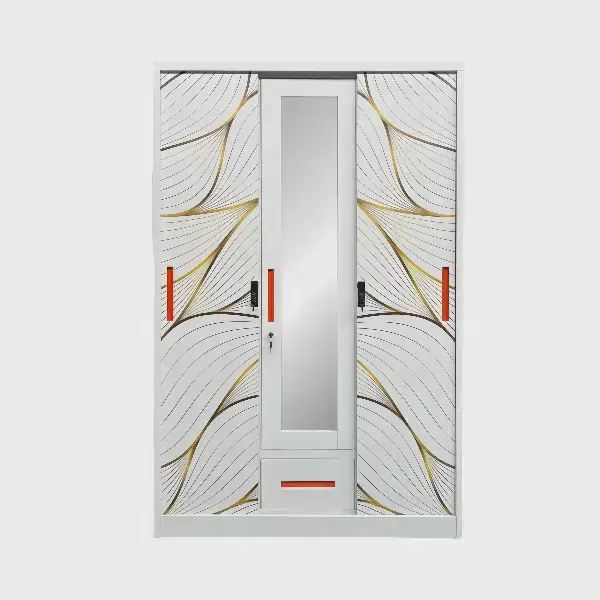
Industrial design is not a single look. A converted textile mill, a fabrication workshop with a mezzanine office, and a stripped-back tech studio each call for a different treatment. The two variables that control the result are finish and proportion.
Finish and Colour Selection
Powder coating is the standard for office-grade steel because it produces a hard, uniform film with good resistance to abrasion and mild chemicals. Common directions include:
- Matte black or charcoal for a strong, graphic outline against brick and pale concrete.
- Gunmetal, graphite and warm greys to soften the contrast in smaller rooms.
- Galvanised or clear-coated raw steel where an honest, slightly mottled surface is wanted; note that raw finishes show handling marks and are best kept to low-contact elements.
- Accent colours on drawer fronts or legs to tie the furniture to wayfinding and brand graphics.
Texture matters as much as colour. A fine-textured matte finish hides fingerprints and minor scuffs far better than a high-gloss film, which is why it is usually the safer specification in high-traffic areas.
Form, Proportion and Detailing
Industrial furniture tends to favour visible construction: exposed frames, bolt heads, perforated panels and honest joints. Rectangular section legs, C-frames and A-frames all sit comfortably in this vocabulary. Avoid over-ornamented profiles; the aesthetic depends on restraint. Where the architecture is heavy, furniture should be lighter in section to prevent the room feeling congested.
Performance Criteria Buyers Should Verify
Aesthetics are easy to judge from a photograph. Durability is not. Before committing to a specification, confirm the following.
Gauge and Structural Integrity
Ask for the steel thickness used in load-bearing members, not just the outer shell. Frame joints should be welded or mechanically fixed with reinforcement, not simply spot-welded at the corners. For shelving and storage, request a uniform load rating per shelf rather than a single optimistic headline figure.
Coating Quality and Corrosion Protection
Pre-treatment is the hidden step that determines whether a coating survives. A proper sequence includes degreasing, a phosphate or conversion stage, and then electrostatic powder application followed by oven curing. Where humidity is high or the room is unheated, specify a zinc-rich primer or galvanised substrate beneath the topcoat.
Ergonomics and Cable Management
Steel desks must still work as desks. Check that height ranges suit seated and standing use, that adjustable feet compensate for uneven concrete floors, and that cable trays, grommets and vertical risers are integrated rather than added later. In industrial conversions, floor level variation is the rule rather than the exception.
Steel Compared With Wood and Laminate in Industrial Settings
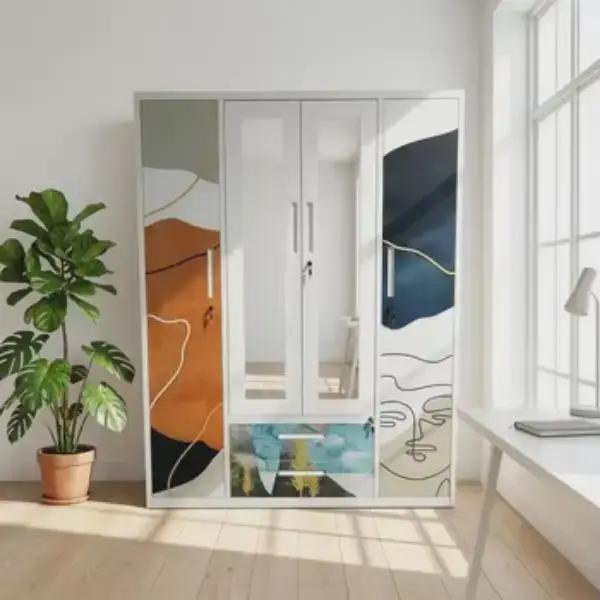
Timber and laminate have legitimate roles, particularly for meeting tables and acoustic panels where warmth is needed. In the areas that take the hardest use, however, steel consistently offers the better return:
- Longer service life under heavy cyclical loading.
- No delamination or moisture swelling at edges and cut-outs.
- More compact structural sections, freeing usable floor and legroom.
- Simpler refurbishment: frames can be re-coated rather than replaced.
- Consistent repeatability across large rollouts, since frames are jig-built rather than individually finished.
- Straightforward end-of-life recycling of the metal content.
The practical approach in most projects is hybrid: steel frames and steel storage as the structural backbone, with timber or laminate tops and acoustic elements to control sound and add warmth. This combination is common in industrial offices because it balances durability with the comfort expectations of a modern workforce.
Planning a Cohesive Steel Office Layout
Industrial spaces are usually long, open and irregular, so furniture should define zones rather than merely fill them. A workable sequence runs as follows:
- Use steel shelving or low storage runs as room dividers between circulation routes and work areas.
- Group workstations in clusters sized to the structural grid, keeping columns outside the seated zone.
- Place heavy-duty steel workbenches and mobile cabinets near service cores or workshop access points.
- Position lockers and tall cabinets against solid walls to reduce visual noise in the open plan.
- Reserve matching steel meeting tables and frames for client-facing areas so the material language stays continuous.
Consistency of finish across every element is what makes the result look intentional. Mixed black, grey and galvanised surfaces in one sightline quickly read as accidental.
Specifying With a Manufacturer
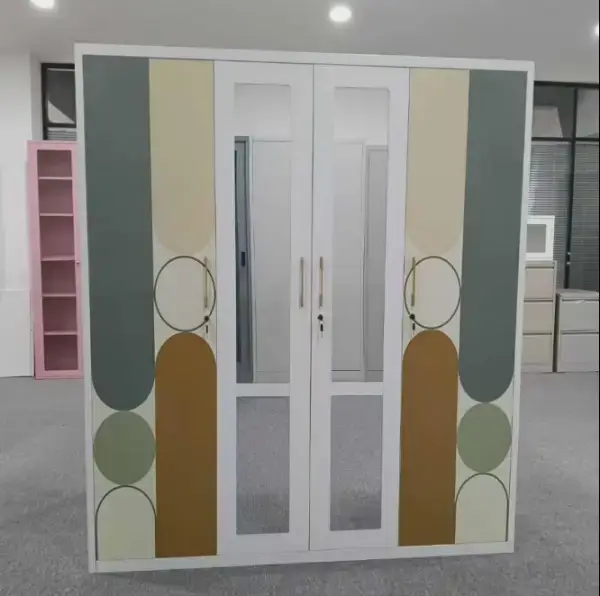
Off-the-shelf steel furniture rarely fits an industrial floorplate exactly. Working with a manufacturer that produces to order allows dimensions, shelf counts, drawer configurations and finish colours to be matched to the building, and it keeps the coating specification identical across the whole project.
LAKSHYO manufactures steel office furniture for exactly this kind of requirement, covering workstations, storage, lockers and shelving built to project dimensions. When briefing a supplier, provide floor plans with column positions, expected load per unit, the finish reference for each element, and the required delivery sequence if the fit-out is phased. These four items eliminate most of the disputes that arise during installation.
Frequently Asked Questions
Does steel furniture feel cold in an open industrial office?
Perception depends on finish and combination. Matte textured coatings, warmer grey tones, timber or laminate tops and acoustic panels reduce the perceived chill considerably without compromising the structural benefits of the frame.
How long should a powder-coated steel desk last?
With correct pre-treatment and curing, a quality powder coating is expected to remain intact for many years of normal office use. Lifespan is determined mainly by coating preparation and by how well the surface is maintained, not by the steel itself.
Can steel furniture be re-coated rather than replaced?
Yes. Frames can be stripped and re-powder-coated, which is a cost-effective way to refresh an office during a rebrand or after years of heavy use, and it avoids the embodied carbon of full replacement.
Industrial interiors reward furniture that accepts the character of the building instead of fighting it. Steel does this while delivering the load ratings, dimensional stability and ease of maintenance that converted warehouses and workshop-adjacent offices demand. Specify the gauge, the coating system and the ergonomics deliberately, keep the finish palette disciplined, and the result will look native to the space and remain serviceable long after a timber or laminate alternative has been retired.