
Facility managers rarely have the luxury of choosing office furniture based on appearance alone. Every purchase decision must survive scrutiny from finance, procurement, and operations teams who care about one thing above all else: total cost of ownership. Steel office furniture consistently earns its place in that conversation. From heavy-duty filing cabinets to modular workstation systems, steel offers a combination of durability, hygiene, and recyclability that few other materials can match. Understanding why steel outperforms wood, laminate, and plastic in commercial environments helps explain why it remains a specification standard across industries, and why suppliers like LAKSHYO continue to see steady demand from facility teams who prioritize long-term performance over short-term savings.
Total Cost of Ownership: Where Steel Changes the Equation
The sticker price of furniture tells a misleading story. A laminate desk might cost less upfront than a steel-framed equivalent, but that gap narrows quickly once you account for replacement cycles, repair labor, and disposal costs. Steel furniture typically delivers a service life of 15 to 20 years in standard office conditions, compared to five to eight years for most wood-composite alternatives. That difference compounds across hundreds of units.
Facility managers who track spending across multiple budget cycles recognize that steel reduces three major cost categories:
- Replacement frequency: Steel resists warping, swelling, and cracking from humidity changes, so it does not need to be swapped out when HVAC systems fluctuate.
- Repair and refinishing: Powder-coated steel surfaces can be touched up locally without full replacement, whereas damaged veneer or laminate often means a complete unit loss.
- Disposal and procurement overhead: Fewer replacement cycles translate directly into fewer purchase orders, delivery appointments, and waste removal fees.
When you divide the purchase price by the number of usable years, steel almost always wins. That calculation is the first thing experienced facility managers run before submitting a capital request.
Durability Under Real-World Office Conditions
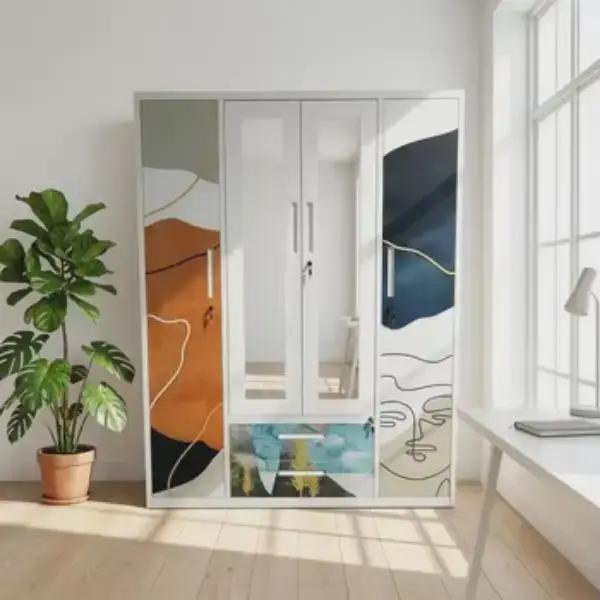
Office environments are harder on furniture than most people assume. Chairs roll into desk edges hundreds of times per week. File drawers open and close with heavy loads. Cleaning crews move equipment through tight aisles. Steel absorbs this punishment without showing fatigue.
Structural Integrity
Steel frames and panels hold their shape under static and dynamic loads that would cause particleboard to sag or crack. A steel lateral file cabinet rated for 150 pounds per drawer does not develop the bowing that eventually jams wooden drawers. This matters in records-heavy departments, mailrooms, and archiving areas where load demands are constant rather than occasional.
Surface Resilience
Modern powder-coating technology gives steel furniture a finish that resists scratching, chipping, and fading far better than paint on wood or plastic. In high-traffic zones such as reception areas, break rooms, and shared workstations, that resilience keeps furniture looking professional without the refinishing costs that wood requires every few years.
Maintenance, Hygiene, and Workplace Health
Facility managers are increasingly responsible for workplace hygiene standards. Steel surfaces are non-porous, which means they do not absorb spills, harbor dust mites, or provide breeding grounds for mold and bacteria. A damp cloth with mild detergent restores a steel surface to a sanitary condition in seconds.
This hygiene advantage has practical implications:
- Steel does not require the specialized wood polishes or sealants that introduce volatile organic compounds into indoor air.
- Non-porous surfaces support infection-control protocols in shared spaces, from call centers to medical office buildings.
- Cleaning crews can service steel furniture faster, reducing labor hours allocated to furniture care.
Wood and laminate furniture, by contrast, often needs periodic waxing, polishing, or resealing to maintain both appearance and surface integrity. Each of those tasks represents additional labor cost and chemical exposure inside the building.
Sustainability and Regulatory Compliance
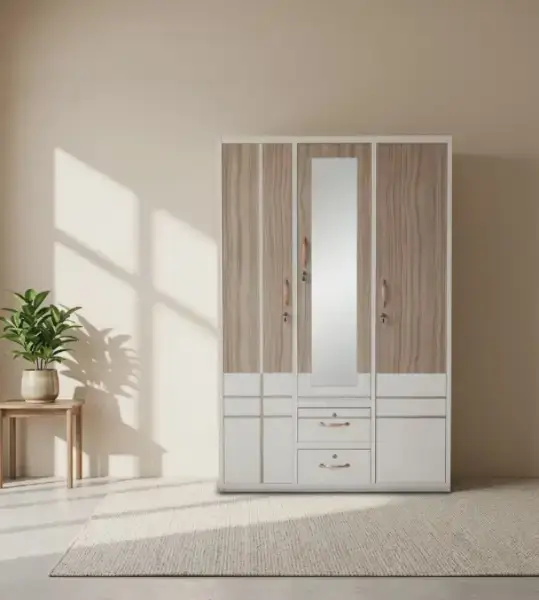
Steel is the most recycled material on the planet. When a steel desk or cabinet reaches end of life, it enters a recycling stream that recovers a high percentage of its original material. Facility managers pursuing LEED certification or internal sustainability targets find steel furniture easier to document and defend than composite wood products, which often contain adhesives and resins that complicate disposal.
Regulatory pressure around indoor air quality also favors steel. Powder-coated steel emits negligible volatile organic compounds after manufacturing, while some engineered wood products continue off-gassing formaldehyde for months or years. For facilities serving sensitive populations, such as healthcare clinics or childcare centers, that difference alone can determine the specification.
Design Flexibility Without Compromise
One persistent myth holds that steel furniture looks institutional or inflexible. That perception no longer reflects reality. Contemporary steel office systems integrate with glass, fabric, and laminate accents to achieve the same design language as wood-based furniture, while retaining the structural benefits of a steel core. Facility managers can reconfigure modular steel workstations as teams grow or shrink, without discarding entire units.
LAKSHYO and similar manufacturers have invested in powder-coating color ranges and connector systems that make steel furniture visually compatible with modern office interiors. The result is a specification that satisfies both the facilities team and the design team, which reduces friction during capital projects.
Practical Considerations Before You Specify
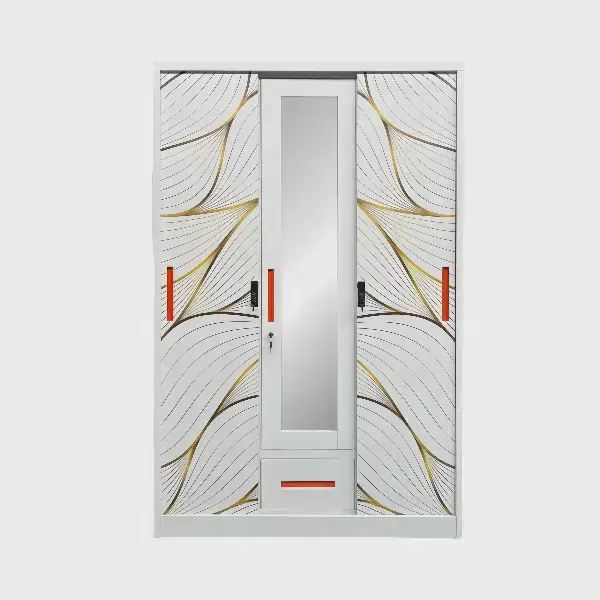
Steel furniture is not the right answer for every application. Executive offices and client-facing conference rooms often benefit from wood or upholstered pieces for aesthetic reasons. But in the functional heart of a facility, steel consistently delivers better outcomes.
Factors worth weighing before a purchase decision:
- Load requirements: Archive rooms, mailrooms, and records storage demand steel.
- Cleaning protocol: Facilities with aggressive hygiene standards should prioritize non-porous surfaces.
- Reconfiguration frequency: Modular steel systems simplify layout changes.
- Budget horizon: If the furniture must last beyond a single budget cycle, steel's economics become decisive.
Facility managers who evaluate furniture through the lens of lifecycle performance rather than purchase price arrive at steel again and again. The material's combination of durability, hygiene, recyclability, and design adaptability makes it a defensible specification in nearly any commercial setting. For organizations that cannot afford to replace furniture every few years, steel is not simply a preference, it is a practical necessity.