
When a business furnishes an office, the decision usually comes down to two materials: steel and wood. Both can look professional on day one, but they behave very differently over the following decade. Wood furniture reacts to humidity, absorbs spills, and gradually loosens at its joints. Steel office furniture holds its geometry, carries heavier loads, and can be cleaned, moved, and reconfigured without structural damage. That difference is not cosmetic. It directly affects replacement cycles, maintenance costs, and how often a working environment has to be disrupted. This article explains the material reasons steel outlasts wood, compares the two across the factors that matter most, and shows how to evaluate steel furniture so that its longevity advantage is actually delivered.
Why Material Behaviour Determines Furniture Lifespan
Durability is not a marketing label. It is the measurable result of how a material responds to load, moisture, temperature change, and repeated handling. Wood and steel sit at opposite ends of that spectrum, and the difference becomes obvious within the first two or three years of daily use.
Wood: A Material That Reacts to Its Environment
Solid wood and engineered wood panels are hygroscopic, meaning they absorb and release moisture from the air. In an air-conditioned office that cycles between cool, dry conditions and humid evenings, this causes continuous expansion and contraction. Over time, the consequences accumulate:
- Edges of particle board and MDF swell when liquid reaches an unsealed surface, and the panel never returns to its original thickness.
- Veneers and laminates lift and delaminate, exposing the core to further damage.
- Screws and dowels loosen as the surrounding fibres compress, which is why wooden drawers begin to sag and doors stop aligning.
- In warm or damp climates, wood also provides food and nesting material for borers and termites.
None of these failures require abuse. Normal humidity and normal use are enough.
Steel: A Material Engineered for Stability
Cold-rolled steel, formed into welded or bolted frames and finished with a powder coating, does not absorb water, does not feed pests, and does not change dimension when the air changes. A steel pedestal, filing cabinet, or workbench keeps its square geometry because the material itself resists deformation and the joints are mechanical rather than glued. The structural integrity of a steel frame is determined at the factory, not by the climate of the building it sits in.
Steel vs Wood Office Furniture: A Direct Comparison
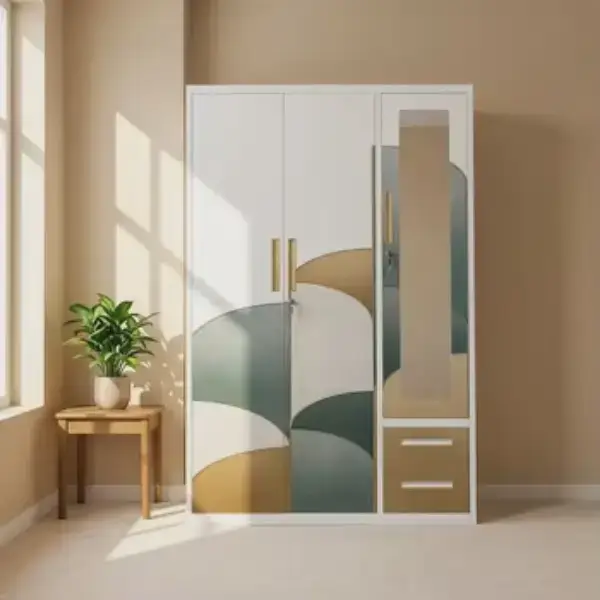
The table below is not a claim that wood has no place in an office. It is an honest comparison of the characteristics that determine how long a piece of furniture stays functional.
- Lifespan under daily use: Steel frames commonly remain serviceable for many years and often outlive the equipment stored in them; wooden furniture typically shows joint fatigue and surface damage far earlier.
- Load capacity: A steel shelf or drawer body distributes weight across a rigid frame, so it tolerates heavy files, binders, and equipment without sagging. Wooden shelves deflect permanently under sustained load.
- Moisture and humidity: Steel is unaffected by ambient moisture or a spilled cup. Wood swells, stains, and delaminates.
- Pests and mould: Steel offers no nutrient source. Wood is vulnerable to borers, termites, and mould in damp conditions.
- Fire response: Steel is non-combustible and adds no fuel to a fire. Wood ignites and contributes to fire load.
- Cleaning and hygiene: Powder-coated steel can be wiped with disinfectant repeatedly without surface degradation, which matters in clinics, laboratories, and food-adjacent areas.
- Reconfiguration: Modular steel shelving, lockers, and desks can be dismantled, relocated, and rebuilt with the same components. Wooden assemblies often cannot be taken apart without damaging fixings.
- Repairability: Individual steel components, runners, locks, and shelves can be replaced. A failed wooden panel usually means replacing the unit.
- Feel and acoustics: Wood feels warmer to the touch and absorbs sound slightly better, which is a genuine advantage in quiet executive rooms. This is the trade-off steel buyers accept in exchange for durability.
The Cost Logic: Why a Longer Lifespan Beats a Lower Price
Purchase price is the smallest part of furniture cost. The real figure includes delivery, assembly, maintenance, replacement, and the productivity lost while an office is being refitted. When a wooden cabinet fails after a few years, the business pays for the item twice and absorbs a disruption it did not plan for.
Steel changes that equation in three ways:
- Fewer replacement cycles. One durable unit replaces two or three wooden units over the same period, and each avoided purchase also avoids the associated disposal and installation cost.
- Lower maintenance spend. Steel needs cleaning, not repair. There are no cracked veneers to patch, no swollen edges to replace, no repeated tightening of loosened joints.
- Better residual value. Steel furniture can be relocated, resold, or redeployed when a floor plan changes. Worn wooden furniture usually ends up as waste.
For organisations that plan their workspace on a five- to ten-year horizon, this is the decisive argument.
Where Steel's Longevity Pays Off Most
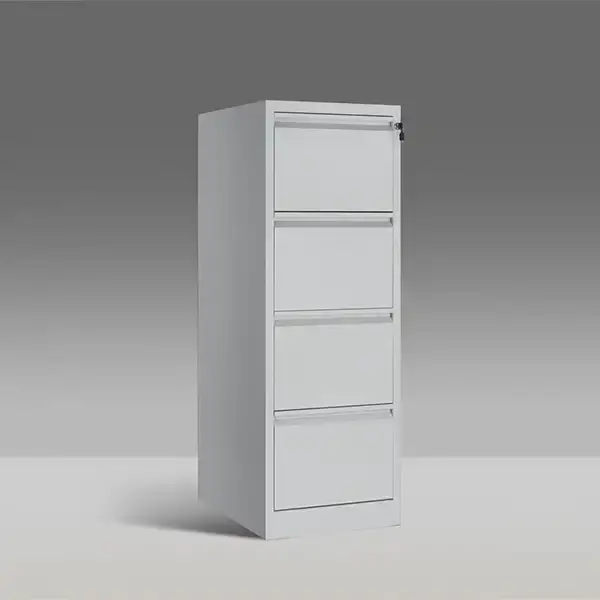
The advantage is not uniform across every room. Steel delivers the greatest return in environments where furniture is used hard and downtime is expensive.
High-Traffic Administrative Floors
Filing cabinets, pedestals, and storage walls in shared areas are opened dozens of times a day. Steel drawer bodies and runners maintain alignment under that frequency.
Records, Archives, and Warehousing
Shelving that carries dense paper loads for years must not creep or bow. Steel racking and shelving hold their profile, which also protects the documents stored on them.
Healthcare, Laboratories, and Industrial Offices
Surfaces must tolerate repeated disinfection and, in some cases, chemical exposure. Non-porous powder-coated steel is a practical specification choice.
Flexible and Hybrid Workplaces
When desks and lockers are reassigned as teams grow or shrink, modular steel systems can be reconfigured instead of replaced.
How to Choose Steel Furniture That Actually Lasts
Not all steel furniture is equal. Thin gauge metal, poor welds, and inadequate coating will fail almost as quickly as low-grade wood. Buyers should specify the following:
- Steel gauge and frame construction: Ask for the sheet thickness and whether load-bearing joints are welded or merely riveted.
- Powder coating quality: A properly pre-treated and cured coating resists chipping and corrosion far better than a thin spray finish.
- Rated load capacity: Request a per-shelf or per-drawer load figure rather than accepting a general durability claim.
- Hardware quality: Locks, telescopic runners, and hinges are usually the first components to fail, so their specification matters as much as the frame.
- Warranty and spare parts: A supplier that stocks replacement components is confirming that the product is designed to be maintained rather than discarded.
Working with an established manufacturer shortens this process considerably. Suppliers such as LAKSHYO publish specifications for frame gauge, coating, and load ratings, which allows a buyer to compare products on measurable terms instead of appearance alone.
Frequently Asked Questions
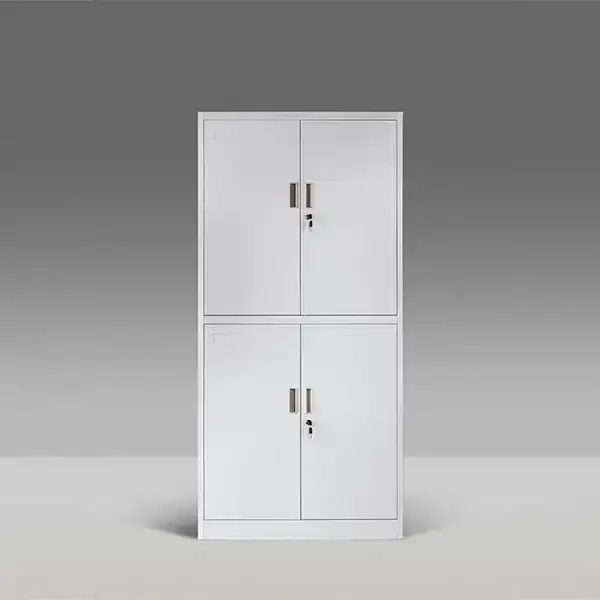
Does steel furniture rust in humid climates?
Properly pre-treated, powder-coated steel resists corrosion in normal office conditions. Rust typically appears only where the coating has been physically damaged and left untreated, which is why touch-up paint should be part of routine maintenance.
Is steel furniture heavier and harder to move?
Individual steel units weigh more than equivalent wooden ones, but modular systems are designed to be dismantled into components. Moving a flat-packed steel shelving unit is usually simpler than relocating a fully assembled wooden cabinet.
Can steel furniture look as professional as wood?
Colour-matched powder coatings, textured finishes, and steel-and-wood hybrids allow steel frames to sit comfortably in client-facing areas. Buyers who want warmth in executive spaces can specify wood only on surfaces that are not subject to heavy wear.
Is steel furniture more expensive upfront?
Usually slightly more, occasionally comparable. The relevant comparison is total cost across the life of the furniture, where steel's longer service life and lower maintenance requirement typically make it the cheaper option.
The Bottom Line
Wood fails because it is a living material that continues to respond to its surroundings long after it has been cut and finished. Steel endures because it does not. For offices that value predictable performance, low maintenance, and the ability to reconfigure space without buying new furniture, steel is the rational choice. The smartest approach is a mixed specification: steel where load, hygiene, and traffic are high, and wood only where its warmth and acoustic character genuinely add value. Buyers who apply that logic will replace their office furniture far less often than those who choose on appearance and price alone.